Best Hiking Shoes
Best barefoot hiking shoes (October 2026)
Ranked by the ground each one actually handles, because that is the only honest way to rank a thin-soled hiking shoe.
By Brijon M. · Updated October 2026
The Merrell Trail Glove 7 at 14 mm is the most practical minimalist hiking shoe for mixed terrain, with a Vibram outsole that holds on wet rock. The Xero Mesa Summit at 9.5 mm is thinner with a toe bumper, and the Vivobarefoot Primus Trail III handles mud best.
How this page is funded: some links here are Amazon affiliate links, so we may earn a commission if you buy — at no extra cost to you. It never changes which products we include or how we rank them, and we take no payment from brands for placement. Full disclosure.
Quick picks
Tap any row to jump to the full write-up. Selection is specification-led, not wear-tested — how we choose.
| # | Product | Best for | Price |
|---|---|---|---|
| 1 |  Best overallMerrell Trail Glove 7A 14 mm stack, zero drop and a Vibram outsole - the most mainstream way to hike in a minimalist shoe, available waterproof or not. | 14 mm, Vibram, full-day mixed terrain | |
| 2 |  Best thinner optionXero Shoes Mesa SummitXero's more protective trail shoe: still 0 mm drop, but 9.5 mm at both ends, which is the difference between finishing a rocky descent and limping it. | 9.5 mm with a real toe bumper | |
| 3 |  Best in mud and wetVivobarefoot Primus Trail III All Weather FGThe top-scoring barefoot shoe in RunRepeat's lab-tested catalog, and the one genuinely thin trail shoe that handles mud and cold rain. | Firm-ground lugs, all-weather upper | |
| 4 |  Best for beginnersXero Shoes Scrambler LowAn 11.5 mm stack with 4 mm of foam and a removable 3.5 mm insole - the most forgiving zero-drop shoe here, and the one we would hand a nervous switcher. | 11.5 mm with a removable insole | |
| 5 | 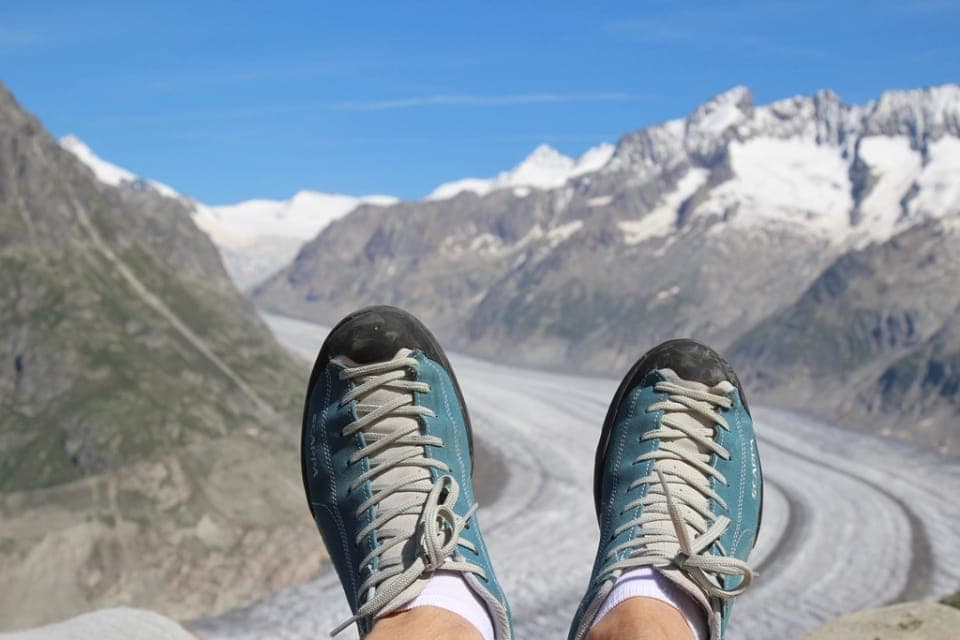 Thinnest trail shoeXero Shoes Mesa Trail WPAn 8 mm stack built from a 5 mm outsole and 3 mm midsole, which keeps real ground feel on trail - the trade-off is that you feel every rock too. | 8 mm; dirt and packed trail only | |
| 6 |  Widest lastFreet HowgillFreet's hallmark is a very wide foot shape, and the Howgill is their light, soft hiking option for people whose toes need the room. | Broad feet that outgrow 'wide' | See it at Freet #ad — brand-direct link, we earn nothing on it. Why we still list it |
| 7 |  Best for heavy packsAltra Lone Peak 9Zero drop with 25 mm of cushioning underneath. Not a barefoot shoe and not pretending to be - it is the zero-drop shoe you hike 2,000 miles in. | 25 mm, zero drop, 2,000-mile standard |
#ad Prices come from the retailer and change; we never publish a figure we have not verified live. Affiliate disclosure.
Hiking is where barefoot advocacy and physics argue most openly. The case for it is strong — better proprioception on uneven ground, a foot that can splay and grip instead of sitting in a stiff box, and far less weight to lift thousands of times a day. The case against is just as real: a 4 mm sole on sharp limestone is a bad afternoon.
So the useful question is not whether minimalist shoes work for hiking but on which ground, carrying what. This page is ranked accordingly.
The terrain ladder
Notice that the top and bottom of that table are both zero drop and have almost nothing else in common. If you take one thing from this hub, take that. Barefoot vs zero drop.
How we chose
The criteria, applied in this order:
- Stack height relative to terrain — the first-order variable in hiking, and the one most roundups skip in favor of ideology.
- Outsole compound and lug pattern, with Vibram and Vibram Megagrip noted where present; they are the best wet-rock performers in the category.
- Toe protection. A toe bumper is rare in thin shoes and valuable on rock.
- Drainage versus waterproofing, assessed honestly — a membrane in a low shoe keeps splash out and water in.
- Toe-box width, because feet swell on long days and a cramped forefoot ruins a descent.
- Currently sold in the US, verified at build time.
Where thin soles genuinely stop working
Being straight about the limits: loose sharp rock, scree, extended talus and heavy multi-day loads. None of the shoes on this page have a rock plate, and no amount of foot conditioning changes what a rock edge does to a 5 mm outsole. If that describes your routes, go up the ladder to 14 mm or more, or accept a cushioned zero-drop shoe and keep the toe box.
That is not a failure of the category — it is a tool-selection question, and the honest answer is more useful than an enthusiastic one.
Before you order: fit and transition
Two things matter more than which shoe on this page you pick, and both are free.
Get the size right. Barefoot brands size from internal length rather than from a conventional size label, and you need roughly 10 to 15 mm beyond your longest toe — more than a normal fitting leaves. Measure your feet, then use the sizing guide and the cross-brand table. Sizing up to get a wider shoe does not work: lasts scale in length, so you get heel slip and toes sitting behind the widest part of the shoe.
Build up slowly. The documented risk in this category is bone stress injury from a rushed transition — in one MRI study of 36 runners, 10 of the 19 who spent 10 weeks moving into minimal shoes developed new bone-marrow edema, mostly without symptoms. Keep your current shoes, add minimal-shoe hours gradually, and judge by how your feet feel the next morning. The transition plan.
Hiking-specific: size hiking shoes with more room than a casual shoe. Feet swell over a long day, and a shoe that fits in the shop can bruise a toenail on a 600 m descent.
The picks in detail
Ranked for mixed day hiking, with the specialists — thinnest, muddiest, widest, heaviest-load — called out individually.
1. Best overall
Merrell Trail Glove 7
A 14 mm stack, zero drop and a Vibram outsole - the most mainstream way to hike in a minimalist shoe, available waterproof or not.
What works
- Vibram traction that holds on wet rock
- Enough stack to hike a full day on mixed terrain
- Easy to find in stores and easy to return
What does not
- Toe box is moderate, not wide - Merrell's last is narrower than Xero's
- 14 mm is firm cushioning, not soft
Skip these if: You need a genuinely wide or extra-wide forefoot.
Specifications as published by the maker and reported by BikeHikeSafari, best barefoot shoes 2026 stated specifications. We have not measured them ourselves. Merrell fit profile
2. Best thinner option
Xero Shoes Mesa Summit
Xero's more protective trail shoe: still 0 mm drop, but 9.5 mm at both ends, which is the difference between finishing a rocky descent and limping it.
What works
- The extra millimeter over the Mesa Trail is noticeable on rock
- Proper toe bumper, which thin trail shoes usually skip
- Zero drop confirmed at both ends
What does not
- Heavier than the rest of the Xero trail line
- Less ground feel, which is the point but will disappoint purists
Skip these if: Ground feel is your primary reason for buying barefoot shoes at all.
Specifications as published by the maker and reported by REI product specifications, Xero Shoes Mesa Summit. We have not measured them ourselves. Xero Shoes fit profile
3. Best in mud and wet
Vivobarefoot Primus Trail III All Weather FG
The top-scoring barefoot shoe in RunRepeat's lab-tested catalog, and the one genuinely thin trail shoe that handles mud and cold rain.
What works
- Aggressive firm-ground lugs that clear mud instead of packing it
- All-weather upper without a stiff waterproof membrane
- Scores highest of any barefoot shoe in RunRepeat's measured catalog
What does not
- Thin sole plus aggressive lugs is a strange feel on hard-packed trail
- Premium price for a shoe you will wear out
Skip these if: Most of your miles are road or hard-packed gravel.
Specifications as published by the maker and reported by RunRepeat barefoot running shoes catalog. We have not measured them ourselves. Vivobarefoot fit profile
4. Best for beginners
Xero Shoes Scrambler Low
An 11.5 mm stack with 4 mm of foam and a removable 3.5 mm insole - the most forgiving zero-drop shoe here, and the one we would hand a nervous switcher.
What works
- The removable 3.5 mm insole gives you two shoes in one as your feet adapt
- Enough foam to survive a full day on concrete in week one
- Still flexes and still zero drop
What does not
- 11.5 mm is a lot of shoe if you came for ground feel
- Heavier than the rest of the line
Skip these if: You have already transitioned and want maximum ground feel - this will feel like a normal sneaker.
Specifications as published by the maker and reported by Outdoor Life, best barefoot shoes 2026 stated specifications. We have not measured them ourselves. Xero Shoes fit profile
5. Thinnest trail shoe
Xero Shoes Mesa Trail WP
An 8 mm stack built from a 5 mm outsole and 3 mm midsole, which keeps real ground feel on trail - the trade-off is that you feel every rock too.
What works
- Among the thinnest genuinely trail-rated soles you can buy
- Waterproof version adds very little weight
- Lugs bite on loose dirt without feeling like a plate underfoot
What does not
- No rock plate, so sharp gravel is punishing
- A waterproof membrane in a thin shoe means slow drying once water gets in over the collar
Skip these if: You hike rocky or scree-heavy terrain, or you are in your first month out of cushioned shoes.
Specifications as published by the maker and reported by Blister Review, Xero Mesa Trail stated specifications. We have not measured them ourselves. Xero Shoes fit profile
6. Widest last
Freet Howgill
Freet's hallmark is a very wide foot shape, and the Howgill is their light, soft hiking option for people whose toes need the room.
What works
- One of the widest hiking lasts available anywhere
- Light and soft rather than stiff and protective
- Flexes properly over uneven ground
What does not
- Soft upper gives no structure on side-slopes
- UK brand, so US buyers deal with international shipping
Skip these if: You carry a heavy pack over rock, or you have a narrow foot.
Specifications as published by the maker and reported by Anya's Reviews, best barefoot hiking boots and shoes. We have not measured them ourselves. All brand fit profiles
7. Best for heavy packs
Altra Lone Peak 9
Zero drop with 25 mm of cushioning underneath. Not a barefoot shoe and not pretending to be - it is the zero-drop shoe you hike 2,000 miles in.
What works
- Zero drop with real cushioning - the combination almost nobody else offers
- The de facto standard on long-distance hiking trails
- Genuinely wide forefoot in standard width
What does not
- 25 mm of foam means essentially no ground feel
- Outsoles are known to wear out faster than the uppers
Skip these if: You want ground feel or foot strengthening. This shoe gives you neither - it gives you zero drop and comfort.
Specifications as published by the maker and reported by BikeHikeSafari, best barefoot shoes 2026 stated specifications. We have not measured them ourselves. Altra fit profile
Common questions
Are barefoot shoes good for hiking?
On dirt, grass and packed trail, genuinely yes — the proprioceptive advantage on uneven ground is real and the weight saving matters over a day. On sharp rock, scree or with a heavy pack, a thin sole is a liability.
What is the best barefoot hiking shoe?
The Merrell Trail Glove 7 for mixed terrain: 14 mm, zero drop, with a Vibram outsole that holds on wet rock. The Xero Mesa Summit at 9.5 mm if you want thinner with a toe bumper.
Can I hike in a 4 mm shoe?
On soft ground, yes and it is excellent. On gravel or rock it is punishing, and no conditioning changes what a rock edge does to a thin outsole.
Do I need waterproof hiking shoes?
Often not. Thin shoes drain and dry far faster than boots, which is an advantage on a route with crossings. A membrane keeps splash out but traps water that comes in over the collar.
How should I size hiking shoes?
With more room than a casual shoe — feet swell over a long day and a toe that touches the end in the shop will hit it hard on a descent. Sizing guide.
Sources
- Outdoor Life, best barefoot shoes 2026 — stated stack heights and weights
- RunRepeat barefoot running shoes catalog
- Ridge et al., foot bone marrow edema after 10-week transition to minimal footwear
- BikeHikeSafari, best barefoot minimalist shoes for hiking and backpacking 2026
- Anya's Reviews, best barefoot hiking boots and shoes
- Outdoor Life, best barefoot shoes 2026 — stated stack heights and weights
Accessed October 2026. Where a source is a manufacturer, the specification is theirs as published — we have not measured it.
Read next
Are barefoot shoes good for hiking?
A terrain-by-terrain verdict table, why soft ground suits them, and the missing rock plate that explains the failures.
By Brijon M. · Updated October 2026
Top pick: Merrell Trail Glove 7

Best Hiking Boots
Best barefoot hiking boots (October 2026)
Five zero-drop boots with real weather protection — and an explicit note that none of them is safety-rated.
By Brijon M. · Updated October 2026
Top pick: Vivobarefoot Tracker (Leather AT / Tracker II)

Barefoot shoes on rocky terrain
The clearest limit in the category, with a specific cause: no rock plate. Which rock is a problem, and how much stack you need.
By Brijon M. · Updated October 2026
Top pick: Altra Lone Peak 9

Barefoot hiking and ankle support
Both camps are describing something real. The three variables that decide which applies, and how to train the active defense.
By Brijon M. · Updated October 2026
Top pick: Vivobarefoot Tracker (Leather AT / Tracker II)
Barefoot shoe sizing, properly
Measure, do not convert. How much toe room to leave, why sizing up for width fails, and what to check when the box arrives.
By Brijon M. · Updated October 2026
Top pick: Xero Shoes Prio
Best Zero-Drop Trail Shoes
Best zero-drop trail running shoes (October 2026)
Six zero-drop trail shoes from 8 mm to 25 mm, with the lugs-versus-stack trade-off and an honest note on rock plates.
By Brijon M. · Updated October 2026
Top pick: Xero Shoes Mesa Summit