Do barefoot shoes help with knee pain?
A plausible mechanism and genuinely thin evidence. Here is the honest version of both.
By Brijon M. · Updated October 2026
Possibly, and nobody can tell you it will. Removing the heel lift changes how load enters the leg and tends to shift work toward the ankle and calf, which is the basis of the claim. But knee pain has many causes a shoe cannot address, the transition can create new soreness elsewhere, and this is a question for a clinician before it is a shopping decision.
How this page is funded: some links here are Amazon affiliate links, so we may earn a commission if you buy — at no extra cost to you. It never changes which products we include or how we rank them, and we take no payment from brands for placement. Full disclosure.
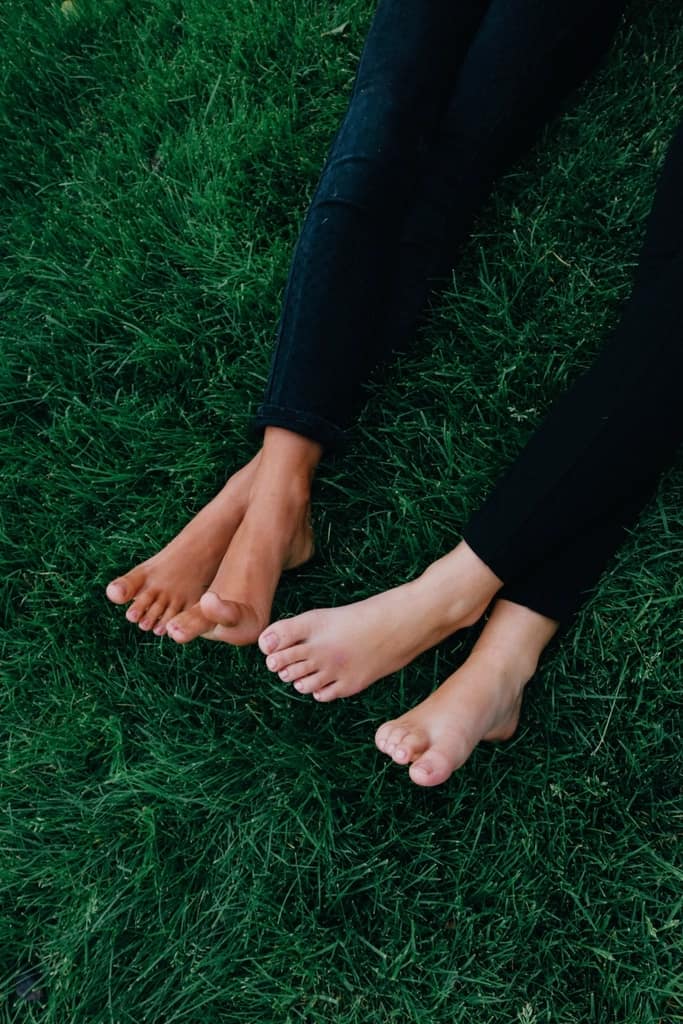
Possibly — and we are not going to tell you it will. The mechanism people describe is real and worth understanding: removing the heel lift changes the angle your foot strikes the ground at, which changes where load enters the leg and tends to move work toward the ankle and calf. If your knee pain is partly a product of how you load the leg, changing that is a plausible lever.
What does not follow is that barefoot shoes treat knee pain. Knee pain has a long list of causes — cartilage, ligaments, patellar tracking, hip and glute weakness, body weight, training load, age, previous injury — and most of them are entirely indifferent to what is on your feet.
What changes at the knee, mechanically
Three things change when you drop your heel to the same height as your forefoot.
- Your foot tends to land flatter. A raised, cushioned heel makes a heel-first landing easy and comfortable. Without it, most people shorten their stride and land closer to mid-foot, particularly when running.
- The calf and Achilles work through a longer range and absorb more of the impact, because the ankle is doing more of the job of accepting load.
- The timing of load through the leg shifts. Less of it arrives as a transmitted spike through an extended knee.
That third point is the whole basis of the claim, and it is a reasonable thing to believe at the level of mechanics. It is also exactly where the evidence runs out. We can describe the mechanism honestly; we cannot point you to a body of research showing that it resolves knee pain in practice, and a page that implied otherwise would be the kind of page this site exists not to be. Our editorial policy.
Where the indirect case is stronger
Two indirect routes are more defensible than the direct one.
Stronger feet, over months. A review of minimalist footwear and plantar intrinsic foot muscle size and strength found encouraging results. A foot that controls its own arch and pronation better is a more stable base for the leg above it. That is a slow, indirect benefit rather than a knee treatment, and it takes months.
Walking more. People who find footwear comfortable walk more, and walking is about as well-supported as interventions get for general joint health. If a wide toe box makes you want to be on your feet, that is a real effect with an unglamorous mechanism.
When to be actively cautious
- You have knee pain right now and no diagnosis. Changing how load travels through an undiagnosed knee is not a controlled experiment. Get it looked at first.
- You run. The documented risk of a rushed minimal transition is bone stress injury, and adding a new landing pattern to a knee that already hurts stacks two variables at once. How to transition to barefoot running.
- Your Achilles or calf has a history. Those are the tissues taking the extra work. A previous Achilles problem makes this a conversation with a physiotherapist.
- You stand on concrete all day. More stack height is what helps there, not less. Standing all day.
What to look for if you want to test it
Keep as many variables fixed as you can, which means more stack rather than less and no change to your activity volume while you adapt. You are trying to isolate one change; a thinner shoe and a longer walk at the same time tells you nothing.
Practically, that means 11 mm or more underfoot, a wide toe box so the shoe is doing the thing it is supposed to do, and a removable insole so you can step down later if the first stage goes well. Cushioned zero drop is a legitimate option here too — you get the flat platform without asking much of the calf, which is the gentlest version of this experiment. The barefoot vs zero drop distinction explains why that is not a cop-out.
The picks in detail
Three zero-drop shoes with enough underfoot to change one variable at a time, from the most minimal of the three to fully cushioned.
Xero Shoes Scrambler Low
An 11.5 mm stack with 4 mm of foam and a removable 3.5 mm insole - the most forgiving zero-drop shoe here, and the one we would hand a nervous switcher.
What works
- The removable 3.5 mm insole gives you two shoes in one as your feet adapt
- Enough foam to survive a full day on concrete in week one
- Still flexes and still zero drop
What does not
- 11.5 mm is a lot of shoe if you came for ground feel
- Heavier than the rest of the line
Skip these if: You have already transitioned and want maximum ground feel - this will feel like a normal sneaker.
Specifications as published by the maker and reported by Outdoor Life, best barefoot shoes 2026 stated specifications. We have not measured them ourselves. Xero Shoes fit profile
Altra Lone Peak 9
Zero drop with 25 mm of cushioning underneath. Not a barefoot shoe and not pretending to be - it is the zero-drop shoe you hike 2,000 miles in.
What works
- Zero drop with real cushioning - the combination almost nobody else offers
- The de facto standard on long-distance hiking trails
- Genuinely wide forefoot in standard width
What does not
- 25 mm of foam means essentially no ground feel
- Outsoles are known to wear out faster than the uppers
Skip these if: You want ground feel or foot strengthening. This shoe gives you neither - it gives you zero drop and comfort.
Specifications as published by the maker and reported by BikeHikeSafari, best barefoot shoes 2026 stated specifications. We have not measured them ourselves. Altra fit profile
Merrell Trail Glove 7
A 14 mm stack, zero drop and a Vibram outsole - the most mainstream way to hike in a minimalist shoe, available waterproof or not.
What works
- Vibram traction that holds on wet rock
- Enough stack to hike a full day on mixed terrain
- Easy to find in stores and easy to return
What does not
- Toe box is moderate, not wide - Merrell's last is narrower than Xero's
- 14 mm is firm cushioning, not soft
Skip these if: You need a genuinely wide or extra-wide forefoot.
Specifications as published by the maker and reported by BikeHikeSafari, best barefoot shoes 2026 stated specifications. We have not measured them ourselves. Merrell fit profile
Before you order: fit and transition
Two things matter more than which shoe on this page you pick, and both are free.
Get the size right. Barefoot brands size from internal length rather than from a conventional size label, and you need roughly 10 to 15 mm beyond your longest toe — more than a normal fitting leaves. Measure your feet, then use the sizing guide and the cross-brand table. Sizing up to get a wider shoe does not work: lasts scale in length, so you get heel slip and toes sitting behind the widest part of the shoe.
Build up slowly. The documented risk in this category is bone stress injury from a rushed transition — in one MRI study of 36 runners, 10 of the 19 who spent 10 weeks moving into minimal shoes developed new bone-marrow edema, mostly without symptoms. Keep your current shoes, add minimal-shoe hours gradually, and judge by how your feet feel the next morning. The transition plan.
Give it twelve weeks before you draw a conclusion, and track the mornings. If your knees are better and nothing else is worse, you have your answer and it cost you a pair of shoes. If your calves are furious and your knees are unchanged, that is also an answer, and the sensible response is your old shoes rather than a thinner pair.
Common questions
Do barefoot shoes help with knee pain?
Possibly. Removing the heel lift shifts load toward the ankle and calf and away from a transmitted spike through the knee, which is a plausible mechanism. There is no body of evidence showing it resolves knee pain, and we will not pretend there is.
Are barefoot shoes bad for your knees?
Not inherently, but a rushed transition is a bad idea with any joint that already hurts. The work that leaves your knee goes to your calf and Achilles, so a fast switch can replace one complaint with another.
Can zero-drop shoes make knee pain worse?
They can during the transition, particularly if you keep your usual walking or running volume. Dropping the heel lengthens the calf and Achilles under load, and tight calves change how the whole leg moves.
Should I try barefoot shoes for knee arthritis?
Ask the clinician managing it before you change footwear. Arthritic knees are affected by how load travels through the leg, which means a footwear change is not a neutral experiment and is not one to run on the strength of a web page.
How long before I know if they are helping my knees?
Give it twelve weeks at a fixed activity volume, and keep more stack underfoot than the internet recommends. Changing two variables at once — thinner shoes and more walking — tells you nothing useful.
Sources
- Outdoor Life, best barefoot shoes 2026 — stated stack heights and weights
- RunRepeat barefoot running shoes catalog
- Ridge et al., foot bone marrow edema after 10-week transition to minimal footwear
- Effects of Minimalist Shoes on Plantar Intrinsic Foot Muscle Size and Strength: A Review
- Epidemiology of Shoe Wearing Patterns Over Time in Older Women: Associations With Foot Pain and Hallux Valgus
- Footwear Toe-Box Shape and Medial Forefoot Pressures in Women With Hallux Valgus
Accessed October 2026. Where a source is a manufacturer, the specification is theirs as published — we have not measured it.
Read next
Are barefoot shoes good for you?
Foot strength: good evidence. Posture and knees: thin evidence. Rushed transitions: documented bone stress injury. The honest version.
By Brijon M. · Updated October 2026
Top pick: Xero Shoes Scrambler Low

Barefoot shoe problems, and what they mean
Symptom by symptom: which problems are the adaptation working, and the three patterns that mean stop.
By Brijon M. · Updated October 2026
Top pick: Xero Shoes Scrambler Low
Calf pain in barefoot shoes
Diffuse tightness for two to four weeks is expected. The mechanism, six things that help, and the patterns that mean stop.
By Brijon M. · Updated October 2026
Top pick: Xero Shoes Scrambler Low
Do barefoot shoes cause plantar fasciitis?
Not inherently — but a fast switch transfers load to the fascia before it has adapted. Pace is the variable, not the brand.
By Brijon M. · Updated October 2026
Top pick: Xero Shoes Scrambler Low
Barefoot vs Zero Drop
Barefoot vs zero drop: which do you actually want?
Every barefoot shoe is zero drop; most zero-drop shoes are not barefoot. A side-by-side table and a pick for each answer.
By Brijon M. · Updated October 2026
Top pick: Vivobarefoot Primus Lite III
Do barefoot shoes help with balance?
Two plausible mechanisms and one catch: an unadapted foot in a thin sole often feels less stable at first.
By Brijon M. · Updated October 2026
Top pick: Vibram FiveFingers KSO EVO