Calf pain in barefoot shoes
The most common first-fortnight complaint, with a clear mechanism and a short list of things that actually help.
By Brijon M. · Updated October 2026
Mild calf and Achilles tightness in the first two to three weeks is expected: a zero-drop shoe makes them work at a longer length than a heeled shoe allowed. It should ease between sessions. Sharp pain, pain that worsens during activity, or pain at a specific point on bone is different.
How this page is funded: some links here are Amazon affiliate links, so we may earn a commission if you buy — at no extra cost to you. It never changes which products we include or how we rank them, and we take no payment from brands for placement. Full disclosure.
Quick picks
Tap any row to jump to the full write-up. Selection is specification-led, not wear-tested — how we choose.
| # | Product | Best for | Price |
|---|---|---|---|
| 1 |  Best step backXero Shoes Scrambler LowAn 11.5 mm stack with 4 mm of foam and a removable 3.5 mm insole - the most forgiving zero-drop shoe here, and the one we would hand a nervous switcher. | 11.5 mm asks less of the calf than 4 mm | |
| 2 |  Best to rotate inAltra Lone Peak 9Zero drop with 25 mm of cushioning underneath. Not a barefoot shoe and not pretending to be - it is the zero-drop shoe you hike 2,000 miles in. | Zero drop with full cushioning | |
| 3 |  Where to return toXero Shoes PrioThe closest thing to a default first barefoot shoe: genuinely wide, genuinely flexible, and cheap enough that a failed experiment does not hurt. | Once the tightness settles |
#ad Prices come from the retailer and change; we never publish a figure we have not verified live. Affiliate disclosure.
If you have just started wearing barefoot shoes and your calves are tight, you are having the normal experience. It is the single most common thing people report in the first fortnight, it has a clear mechanical explanation, and for most people it resolves.
Why it happens
A conventional shoe with 8 to 12 mm of heel-to-toe drop holds your heel above your forefoot. That shortens the working length of your calf complex and your Achilles — not dramatically on any single step, but as the resting position for however many years you have worn heeled shoes.
Put on a zero-drop shoe and your heel drops to the level of your forefoot. The calf and Achilles now work through a longer range, under more stretch, on every step. Muscle responds to that by adapting, and the intermediate sensation is tightness.
The size of the change is proportional to how much drop you are coming from, which is why people who habitually wear boots or heeled shoes often notice more of it than people who live in flat trainers. What zero drop means.
What normal looks like
- Diffuse tightness across the calf or up into the Achilles, rather than one sharp point.
- Worse the morning after a longer session, easing as you move.
- Improving week on week. Week three should be better than week one.
- Eases between sessions. You should start each session better than you finished the last.
- Responds to gentle movement and stretching rather than needing rest.
What is not normal
What actually helps
- Reduce the volume, do not stop entirely. Go back to the hours you were comfortable at last week and hold there. Complete rest loses the adaptation; pushing through accumulates load.
- Slow calf raises, three times a week. Rise over three seconds, hold one, lower over three. The lowering phase is where the Achilles adapts. Fifteen reps, three sets. Full exercise set.
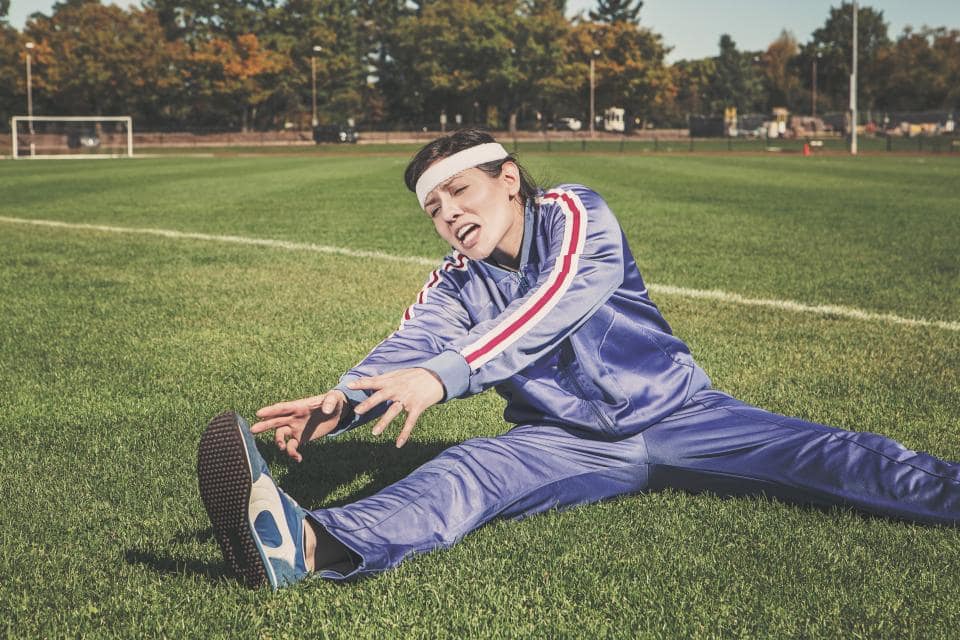
- A wall calf stretch, held 30 seconds, twice per leg. Unglamorous and effective. Do it after activity rather than before.
- Alternate footwear within the day. Barefoot shoes in the morning, your old shoes in the afternoon. This is the single most effective adjustment and most people resist it.
- Walk on softer ground while it settles. Grass and dirt ask less of the calf than concrete does.
- Check you have not started too thin. An 11 mm shoe asks less of the whole system than a 4 mm one. If you began at the thin end, that is the most likely cause.
How long it should take
Most people find the tightness largely resolved within two to four weeks of a sensible build-up. If you are at six weeks and no better, the usual culprit is volume rather than anatomy: the hours went up faster than the tissue adapted. Drop back two stages and rebuild. Timeline.
And note the one case where calf tightness points somewhere else: calf tightness is associated with plantar heel pain, so if your heel has also started complaining, treat the two as related and get it looked at rather than working through it. Plantar fasciitis, honestly.
The picks in detail
If calf pain is what brought you here, the practical fix is usually a thicker shoe for a few weeks or a cushioned zero-drop pair in rotation. Both are below.
1. Best step back
Xero Shoes Scrambler Low
An 11.5 mm stack with 4 mm of foam and a removable 3.5 mm insole - the most forgiving zero-drop shoe here, and the one we would hand a nervous switcher.
What works
- The removable 3.5 mm insole gives you two shoes in one as your feet adapt
- Enough foam to survive a full day on concrete in week one
- Still flexes and still zero drop
What does not
- 11.5 mm is a lot of shoe if you came for ground feel
- Heavier than the rest of the line
Skip these if: You have already transitioned and want maximum ground feel - this will feel like a normal sneaker.
Specifications as published by the maker and reported by Outdoor Life, best barefoot shoes 2026 stated specifications. We have not measured them ourselves. Xero Shoes fit profile
2. Best to rotate in
Altra Lone Peak 9
Zero drop with 25 mm of cushioning underneath. Not a barefoot shoe and not pretending to be - it is the zero-drop shoe you hike 2,000 miles in.
What works
- Zero drop with real cushioning - the combination almost nobody else offers
- The de facto standard on long-distance hiking trails
- Genuinely wide forefoot in standard width
What does not
- 25 mm of foam means essentially no ground feel
- Outsoles are known to wear out faster than the uppers
Skip these if: You want ground feel or foot strengthening. This shoe gives you neither - it gives you zero drop and comfort.
Specifications as published by the maker and reported by BikeHikeSafari, best barefoot shoes 2026 stated specifications. We have not measured them ourselves. Altra fit profile
3. Where to return to
Xero Shoes Prio
The closest thing to a default first barefoot shoe: genuinely wide, genuinely flexible, and cheap enough that a failed experiment does not hurt.
What works
- Removable 2 mm insole, so you can go thinner as your feet adapt
- Wide enough for most square and plateau foot shapes
- Flexes and rolls flat, which is the quickest way to spot a fake minimalist shoe
What does not
- The lacing panel can pressure a high instep
- Thin heel padding is noticeable on hard floors for the first week
Skip these if: You have a high-volume foot and dislike lace pressure across the top, or you need any cushioning at all on day one.
Specifications as published by the maker and reported by Xero Shoes Prio listing specifications. We have not measured them ourselves. Xero Shoes fit profile
Common questions
Is calf pain normal with barefoot shoes?
Mild, diffuse calf and Achilles tightness in the first two to three weeks is very common and expected — a zero-drop shoe makes them work at a longer length. It should ease between sessions and improve week on week.
How long does barefoot shoe calf pain last?
Usually two to four weeks with a sensible build-up. If you are at six weeks with no improvement, the hours most likely went up faster than the tissue adapted — drop back and rebuild.
Should I stop wearing them if my calves hurt?
Reduce rather than stop, for the ordinary tightness. Stop and get it assessed for a sharp reproducible point, pain that worsens during activity, night pain, swelling, or anything sudden with a snap.
Does stretching help?
A wall calf stretch after activity, plus slow calf raises three times a week, is the combination most people find helps. Stretching alone without the strengthening is less effective.
Will this happen again if I go thinner later?
Mildly, possibly. Each significant reduction in stack height is a new load, though the calf-length adaptation is largely a one-time change — once you are at zero drop, going from 11 mm to 4 mm is a foot and bone question rather than a calf one.
Sources
- Ridge et al., foot bone marrow edema after 10-week transition to minimal footwear (BYU ScholarsArchive)
- How Does Running in Minimalist Shoes Affect Injury Risk? A Systematic Review
- Counseling Runners on Safely Transitioning to Minimal Shoes (University of Florida PM&R)
- A Comparison of Foot Strengthening versus Minimal Footwear Use on Intrinsic Muscle Size and Strength
Accessed October 2026. Where a source is a manufacturer, the specification is theirs as published — we have not measured it.
Read next

How to transition to barefoot shoes
A concrete 16-week plan with numbers, built around the MRI study that found bone-marrow edema in 10 of 19 transitioning runners.
By Brijon M. · Updated October 2026
Top pick: Xero Shoes Scrambler Low

Foot strengthening exercises for the transition
Six exercises, fifteen minutes, three times a week — building the capacity minimal shoes demand without the loading risk.
By Brijon M. · Updated October 2026
Top pick: Correct Toes Toe Spacers

What is zero drop?
Drop is the height difference between a shoe's heel and forefoot. Zero drop means level — and says nothing about cushioning.
By Brijon M. · Updated October 2026
Top pick: Altra Lone Peak 9

Barefoot shoe problems, and what they mean
Symptom by symptom: which problems are the adaptation working, and the three patterns that mean stop.
By Brijon M. · Updated October 2026
Top pick: Xero Shoes Scrambler Low
Calf pain from barefoot running
Expected in the first weeks and actually informative. What is normal, six fixes, and why it says nothing about your bones.
By Brijon M. · Updated October 2026
Top pick: Topo Athletic ST-5

How long does the transition take?
8-16 weeks for everyday wear, 6-12 months for full running mileage, and a stage table explaining why bone sets the pace.
By Brijon M. · Updated October 2026
Top pick: Xero Shoes Scrambler Low