Do barefoot shoes cause plantar fasciitis?
Not inherently. A rushed transition can trigger it, and the mechanism is easy to describe.
By Brijon M. · Updated October 2026
Barefoot shoes do not inherently cause plantar fasciitis, but switching too fast can trigger a flare-up. Removing the heel lift and the arch support transfers load onto the plantar fascia, Achilles and calf before those tissues have adapted. The fix is pace, not a different shoe — and if you have symptoms now, see a clinician before changing footwear.
How this page is funded: some links here are Amazon affiliate links, so we may earn a commission if you buy — at no extra cost to you. It never changes which products we include or how we rank them, and we take no payment from brands for placement. Full disclosure.
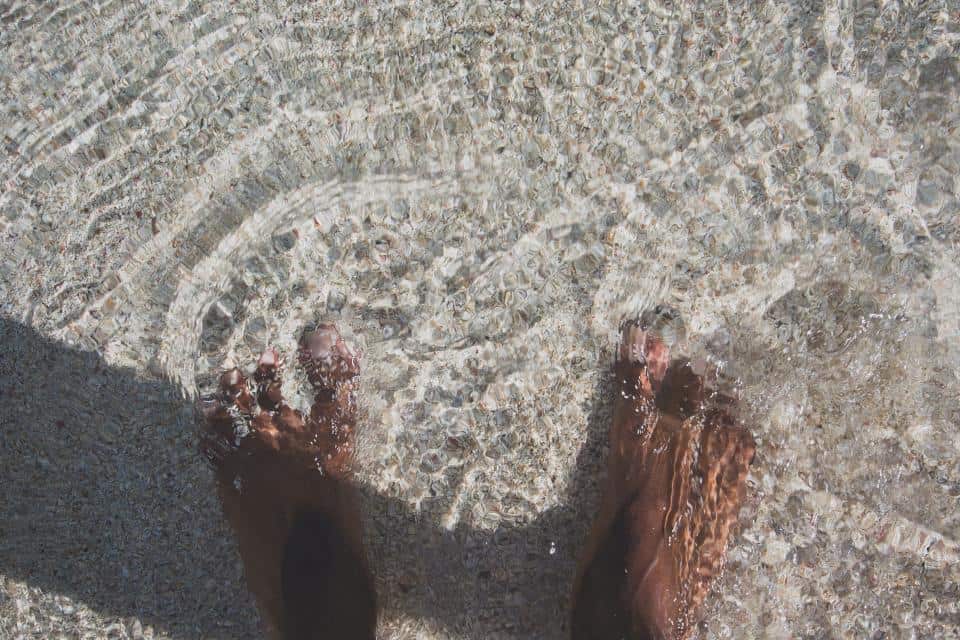
No, not inherently — and also yes, if you switch too fast. Both halves of that are true and the distinction is the whole page. Barefoot shoes do not contain anything that damages a plantar fascia. What they do is remove two things your foot has been leaning on, and if you remove them faster than the tissue can adapt, you can produce exactly the symptoms you were hoping to avoid.
What actually changes under your foot
A conventional shoe does two things for your arch that you may not have noticed. The heel lift shortens the distance the calf and Achilles have to cover, so they work through a smaller range. And the arch support holds the arch's shape, so the plantar fascia and the small muscles underneath it do less of that job themselves.
Take both away in one step and that work has to go somewhere. It goes to the calf, the Achilles and the plantar fascia — which is a connected chain rather than three separate parts. That is why calf tightness and arch soreness show up together in the first weeks of a transition, and why the people who report a plantar fascia flare-up are almost always the people who went from cushioned shoes to all-day minimal wear quickly.
This is adaptation load, and adaptation load is not inherently bad — it is how tissue gets stronger. The review evidence on minimalist footwear and plantar intrinsic foot muscle size and strength is encouraging precisely because that work produces a stronger foot over months. The problem is dose, and dose is the one variable entirely under your control.
The signals to watch, and what each one means
The rule that catches almost everything: judge by the next morning, not by how it feels at the time. Minimal shoes feel fine for far longer than the tissue is actually coping, which is why people discover they overdid it a day late.
If you already have plantar fasciitis
Then this is not a shopping decision and we are not going to turn it into one. Footwear changes how load travels through the foot, which can help or hurt depending on what is actually wrong, and a plantar fascia that is currently symptomatic is not in a good position to absorb a new load pattern. See a podiatrist or physiotherapist first — they can examine your foot and we cannot.
What we can say is that the people on forums who report barefoot shoes resolving long-standing plantar fasciitis and the people who report them triggering it are both telling the truth about their own feet, and neither group's experience predicts yours. Best barefoot shoes for plantar fasciitis is the page for after you have had that conversation.
What to look for if you are going ahead carefully
Two properties matter and neither of them is brand. Enough stack height to give the fascia some margin — 11 mm or more while you adapt, rather than 4 mm. And a removable insole, so you can step down gradually instead of buying twice.
If your days are long and mostly on concrete, go further up the stack range and stay there; hard flat surfaces are the one condition where more material underfoot is simply better and no amount of adaptation changes it.
The picks in detail
Three zero-drop shoes with enough underfoot to leave the plantar fascia some margin, ranked by how much protection each one gives.
Xero Shoes Scrambler Low
An 11.5 mm stack with 4 mm of foam and a removable 3.5 mm insole - the most forgiving zero-drop shoe here, and the one we would hand a nervous switcher.
What works
- The removable 3.5 mm insole gives you two shoes in one as your feet adapt
- Enough foam to survive a full day on concrete in week one
- Still flexes and still zero drop
What does not
- 11.5 mm is a lot of shoe if you came for ground feel
- Heavier than the rest of the line
Skip these if: You have already transitioned and want maximum ground feel - this will feel like a normal sneaker.
Specifications as published by the maker and reported by Outdoor Life, best barefoot shoes 2026 stated specifications. We have not measured them ourselves. Xero Shoes fit profile
Merrell Trail Glove 7
A 14 mm stack, zero drop and a Vibram outsole - the most mainstream way to hike in a minimalist shoe, available waterproof or not.
What works
- Vibram traction that holds on wet rock
- Enough stack to hike a full day on mixed terrain
- Easy to find in stores and easy to return
What does not
- Toe box is moderate, not wide - Merrell's last is narrower than Xero's
- 14 mm is firm cushioning, not soft
Skip these if: You need a genuinely wide or extra-wide forefoot.
Specifications as published by the maker and reported by BikeHikeSafari, best barefoot shoes 2026 stated specifications. We have not measured them ourselves. Merrell fit profile
Altra Lone Peak 9
Zero drop with 25 mm of cushioning underneath. Not a barefoot shoe and not pretending to be - it is the zero-drop shoe you hike 2,000 miles in.
What works
- Zero drop with real cushioning - the combination almost nobody else offers
- The de facto standard on long-distance hiking trails
- Genuinely wide forefoot in standard width
What does not
- 25 mm of foam means essentially no ground feel
- Outsoles are known to wear out faster than the uppers
Skip these if: You want ground feel or foot strengthening. This shoe gives you neither - it gives you zero drop and comfort.
Specifications as published by the maker and reported by BikeHikeSafari, best barefoot shoes 2026 stated specifications. We have not measured them ourselves. Altra fit profile
Before you order: fit and transition
Two things matter more than which shoe on this page you pick, and both are free.
Get the size right. Barefoot brands size from internal length rather than from a conventional size label, and you need roughly 10 to 15 mm beyond your longest toe — more than a normal fitting leaves. Measure your feet, then use the sizing guide and the cross-brand table. Sizing up to get a wider shoe does not work: lasts scale in length, so you get heel slip and toes sitting behind the widest part of the shoe.
Build up slowly. The documented risk in this category is bone stress injury from a rushed transition — in one MRI study of 36 runners, 10 of the 19 who spent 10 weeks moving into minimal shoes developed new bone-marrow edema, mostly without symptoms. Keep your current shoes, add minimal-shoe hours gradually, and judge by how your feet feel the next morning. The transition plan.
For this page specifically, halve the usual pace. Twenty or thirty minutes a day for the first fortnight, increasing only in weeks where the mornings have been clear, is slower than anyone recommends and the right call if a fascia flare-up is what you are trying to avoid.
Common questions
Do barefoot shoes cause plantar fasciitis?
Not inherently. Removing the heel lift and arch support transfers load onto the plantar fascia, Achilles and calf, and doing that faster than the tissue adapts can trigger a flare-up. The variable is pace, not the shoe.
Can barefoot shoes help plantar fasciitis?
Some people report exactly that, and the intrinsic foot muscle evidence makes a stronger foot plausible over months. But nobody can tell you it will help your foot, and if you have symptoms now that is a clinical question first.
How do I know if barefoot shoes are hurting my arch?
Watch the first steps of the morning. Evening soreness that has cleared by morning is adaptation. Sharp heel pain when you get out of bed is the classic plantar fasciitis pattern and a reason to stop increasing your hours.
What stack height is safest for plantar fascia concerns?
Eleven millimeters or more while you adapt, with a removable insole so you can go thinner later. The 4 mm shoes leave the fascia no margin and are a poor place to start.
Should I stop wearing barefoot shoes if my arch hurts?
Stop increasing, and go back to your previous footwear for the hours that hurt. If the pain is worse on the second day than the first, or sharp on the first steps of the morning, stop and get it looked at.
Sources
- Outdoor Life, best barefoot shoes 2026 — stated stack heights and weights
- RunRepeat barefoot running shoes catalog
- Ridge et al., foot bone marrow edema after 10-week transition to minimal footwear
- Effects of Minimalist Shoes on Plantar Intrinsic Foot Muscle Size and Strength: A Review
- Epidemiology of Shoe Wearing Patterns Over Time in Older Women: Associations With Foot Pain and Hallux Valgus
- Footwear Toe-Box Shape and Medial Forefoot Pressures in Women With Hallux Valgus
Accessed October 2026. Where a source is a manufacturer, the specification is theirs as published — we have not measured it.
Read next
Best for Plantar Heel Pain
Barefoot shoes and plantar fasciitis (October 2026)
Mixed evidence, two opposite mechanisms, and no cure claims. The lower-risk sequence if pain has already settled.
By Brijon M. · Updated October 2026
Top pick: Altra Lone Peak 9
Barefoot shoe problems, and what they mean
Symptom by symptom: which problems are the adaptation working, and the three patterns that mean stop.
By Brijon M. · Updated October 2026
Top pick: Xero Shoes Scrambler Low
Calf pain in barefoot shoes
Diffuse tightness for two to four weeks is expected. The mechanism, six things that help, and the patterns that mean stop.
By Brijon M. · Updated October 2026
Top pick: Xero Shoes Scrambler Low

How to transition to barefoot shoes
A concrete 16-week plan with numbers, built around the MRI study that found bone-marrow edema in 10 of 19 transitioning runners.
By Brijon M. · Updated October 2026
Top pick: Xero Shoes Scrambler Low
Do barefoot shoes have arch support?
No, by design. Whether that suits you depends on whether your arch is flexible, rigid or already irritated.
By Brijon M. · Updated October 2026
Top pick: Xero Shoes Scrambler Low
Do barefoot shoes help with knee pain?
A plausible load-redistribution mechanism and genuinely thin evidence. What moves at the knee, and what nobody can promise.
By Brijon M. · Updated October 2026
Top pick: Xero Shoes Scrambler Low