Barefoot shoes and fat pad atrophy
The cushion under your heel and forefoot is tissue, not foam. Here is what is known, what is not, and how to shop if yours is thin.
By Brijon M. · Updated October 2026
There is a fat pad under your heel and forefoot that acts as your built-in cushioning, and it thins with age, long-term steroid use and some conditions. We could not find research that tests whether minimal footwear thins it, so anyone stating that confidently is guessing. If you already have fat pad atrophy, thin soles are the wrong direction and zero-drop cushioned shoes are the right one.
How this page is funded: some links here are Amazon affiliate links, so we may earn a commission if you buy — at no extra cost to you. It never changes which products we include or how we rank them, and we take no payment from brands for placement. Full disclosure.
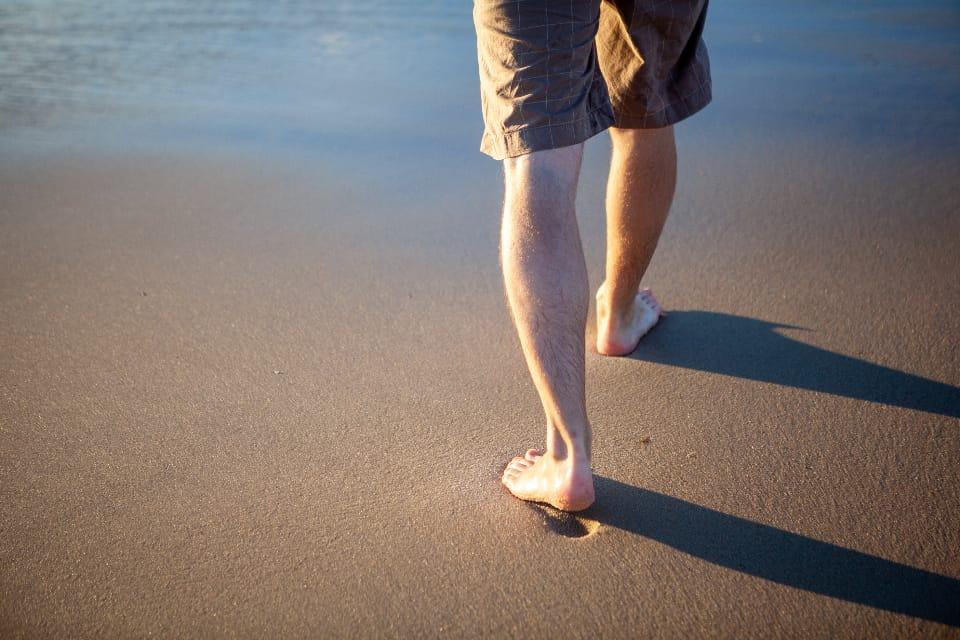
Of all the objections raised against thin-soled shoes, this is the one we think deserves the most careful answer. Under your heel and under the ball of your foot sits a specialized fat pad — chambers of fat held in fibrous walls — and it is genuinely your body's own shock absorber. When it thins, walking on hard ground hurts in a way no insole fully compensates for.
The question people are asking is whether minimal footwear wears it out faster. The honest answer, which you will not find on either side of the argument online, is in two parts: we could not find research that tests this directly, and if you already have fat pad atrophy, thin soles are clearly the wrong direction. The second part is actionable even though the first is unresolved.
What the fat pad does
The plantar fat pad is not simply fat. It is arranged in chambers separated by fibrous septa, which lets it deform under load and spring back rather than squashing flat and staying there. Functionally it spreads the peak pressure of each step over a wider area and over a longer time, which is exactly what a cushioned midsole is trying to imitate.
It sits thickest under the heel and under the metatarsal heads — the two places that take the most pressure. When it thins, those are the two places that hurt: a bruised, deep ache under the heel, or the sensation of walking on the bones at the ball of the foot.
What is actually known about why it thins
The contributors that are routinely described clinically are age, long-term corticosteroid use including repeated injections into the heel, inflammatory arthritis, diabetes, and previous trauma or surgery to the area. Those are the factors a clinician looks for, and none of them is footwear.
What we specifically looked for and did not find was research testing whether wearing minimal footwear changes fat pad thickness over time. That absence cuts both ways, and we are going to say so plainly: anyone telling you barefoot shoes destroy your fat pad is asserting something we could not find tested, and anyone telling you they cannot possibly affect it is doing the same thing in the opposite direction.
The reasoning we would apply anyway
Two things can be said without overclaiming. Tissues generally adapt to the loads they experience, which is the whole basis of the muscle-strengthening argument elsewhere on this site — a review of minimalist footwear and plantar intrinsic foot muscle size and strength found encouraging results for thin, flexible shoes. Whether the fat pad behaves like muscle in that respect is not established, and fat is not muscle.
The other is about pain as information. A thin sole gives you immediate feedback about how hard you are landing, and people in minimal shoes typically land more softly as a result. That is a plausible argument in the other direction, and it is still an argument rather than a finding.
What to wear if your fat pad is already thin
Here the advice is clear-cut, and it is the reason this page carries picks at all. If you have been told you have fat pad atrophy, or you have the symptom pattern described above, thin soles are the wrong direction and you should not pursue them. What you can keep from this category is the part that costs you nothing: zero drop and a wide toe box.
That combination exists. A zero-drop cushioned shoe gives you a flat platform and a roomy forefoot with substantial material underfoot — the Altra Lone Peak 9 at 25 mm is the clearest example, and the Merrell Trail Glove 7 at 14 mm is the middle ground. Barefoot vs zero drop explains why those are not the same thing as a barefoot shoe, and barefoot shoes for heavier bodies uses the same logic for a different reason.
Two practical notes. A cushioned insole in a thin shoe is a partial fix and takes up the room your toes need, so a shoe designed with the cushioning is better than a thin shoe you pad out — insoles for barefoot shoes covers the trade. And soft ground genuinely helps: grass and trails hurt far less than tile and concrete, which is worth knowing when you choose where to walk.
Do not self-diagnose this
Heel pain has several common causes that feel similar and need different handling. Plantar fasciitis typically hurts most on the first steps of the morning and eases as you move; fat pad thinning tends to hurt more the longer you stand on a hard surface; a calcaneal stress fracture hurts on impact and gets worse rather than better with activity. Those need telling apart by someone who can examine the foot and image it if necessary.
Do barefoot shoes cause plantar fasciitis covers the most commonly confused of those, and the plantar fasciitis roundup handles the footwear side once you know what you are dealing with.
Before you order: fit and transition
Two things matter more than which shoe on this page you pick, and both are free.
Get the size right. Barefoot brands size from internal length rather than from a conventional size label, and you need roughly 10 to 15 mm beyond your longest toe — more than a normal fitting leaves. Measure your feet, then use the sizing guide and the cross-brand table. Sizing up to get a wider shoe does not work: lasts scale in length, so you get heel slip and toes sitting behind the widest part of the shoe.
Build up slowly. The documented risk in this category is bone stress injury from a rushed transition — in one MRI study of 36 runners, 10 of the 19 who spent 10 weeks moving into minimal shoes developed new bone-marrow edema, mostly without symptoms. Keep your current shoes, add minimal-shoe hours gradually, and judge by how your feet feel the next morning. The transition plan.
Fat-pad specific: if hard floors are the problem, do not fix it by sizing up and adding a thick insole. That raises your heel inside the shoe and cancels the zero drop you were keeping. Buy a shoe that is flat and cushioned by design instead.
The picks in detail
Three zero-drop shoes with real material underfoot, ordered from most cushioned to thinnest - for this page, start at the top.
Altra Lone Peak 9
Zero drop with 25 mm of cushioning underneath. Not a barefoot shoe and not pretending to be - it is the zero-drop shoe you hike 2,000 miles in.
What works
- Zero drop with real cushioning - the combination almost nobody else offers
- The de facto standard on long-distance hiking trails
- Genuinely wide forefoot in standard width
What does not
- 25 mm of foam means essentially no ground feel
- Outsoles are known to wear out faster than the uppers
Skip these if: You want ground feel or foot strengthening. This shoe gives you neither - it gives you zero drop and comfort.
Specifications as published by the maker and reported by BikeHikeSafari, best barefoot shoes 2026 stated specifications. We have not measured them ourselves. Altra fit profile
Merrell Trail Glove 7
A 14 mm stack, zero drop and a Vibram outsole - the most mainstream way to hike in a minimalist shoe, available waterproof or not.
What works
- Vibram traction that holds on wet rock
- Enough stack to hike a full day on mixed terrain
- Easy to find in stores and easy to return
What does not
- Toe box is moderate, not wide - Merrell's last is narrower than Xero's
- 14 mm is firm cushioning, not soft
Skip these if: You need a genuinely wide or extra-wide forefoot.
Specifications as published by the maker and reported by BikeHikeSafari, best barefoot shoes 2026 stated specifications. We have not measured them ourselves. Merrell fit profile
Xero Shoes Scrambler Low
An 11.5 mm stack with 4 mm of foam and a removable 3.5 mm insole - the most forgiving zero-drop shoe here, and the one we would hand a nervous switcher.
What works
- The removable 3.5 mm insole gives you two shoes in one as your feet adapt
- Enough foam to survive a full day on concrete in week one
- Still flexes and still zero drop
What does not
- 11.5 mm is a lot of shoe if you came for ground feel
- Heavier than the rest of the line
Skip these if: You have already transitioned and want maximum ground feel - this will feel like a normal sneaker.
Specifications as published by the maker and reported by Outdoor Life, best barefoot shoes 2026 stated specifications. We have not measured them ourselves. Xero Shoes fit profile
Common questions
Do barefoot shoes cause fat pad atrophy?
We could not find research that tests this directly, so we will not claim an answer. The contributors described clinically are age, long-term steroid use, inflammatory arthritis, diabetes and previous injury. Anyone stating confidently that minimal shoes cause it is going beyond the evidence.
What is the fat pad in your foot?
A specialized cushion of fat held in fibrous chambers under the heel and the ball of the foot. It spreads the peak pressure of each step over a wider area and a longer time, which is the job a cushioned midsole imitates.
What does fat pad atrophy feel like?
A deep, bruised ache under the heel, or the sense of walking on the bones at the ball of the foot. It usually gets worse the longer you stand on hard surfaces and better on soft ground, which is a different pattern from plantar fasciitis.
Can I wear barefoot shoes if I have fat pad atrophy?
Not thin ones. Keep the two properties that cost you nothing - zero drop and a wide toe box - and take the cushioning. A zero-drop cushioned shoe gives you a flat platform and a roomy forefoot with real material underfoot.
Will a thick insole fix it?
Partly, and with a cost. A thick insole takes up the room your toes need and raises your heel inside the shoe, which cancels the zero drop. A shoe designed flat and cushioned is a better answer than a thin shoe padded out.
Is my heel pain fat pad atrophy or plantar fasciitis?
They feel similar and need telling apart by examination. Plantar fasciitis classically hurts most on the first steps of the morning; fat pad thinning hurts more the longer you stand on hard ground. Get it looked at rather than guessing from a web page.
Sources
- Outdoor Life, best barefoot shoes 2026 — stated stack heights and weights
- RunRepeat barefoot running shoes catalog
- Ridge et al., foot bone marrow edema after 10-week transition to minimal footwear
- Effects of Minimalist Shoes on Plantar Intrinsic Foot Muscle Size and Strength: A Review
Accessed October 2026. Where a source is a manufacturer, the specification is theirs as published — we have not measured it.
Read next
Do barefoot shoes cause plantar fasciitis?
Not inherently — but a fast switch transfers load to the fascia before it has adapted. Pace is the variable, not the brand.
By Brijon M. · Updated October 2026
Top pick: Xero Shoes Scrambler Low
Barefoot vs Zero Drop
Barefoot vs zero drop: which do you actually want?
Every barefoot shoe is zero drop; most zero-drop shoes are not barefoot. A side-by-side table and a pick for each answer.
By Brijon M. · Updated October 2026
Top pick: Vivobarefoot Primus Lite III
Best for Plantar Heel Pain
Barefoot shoes and plantar fasciitis (October 2026)
Mixed evidence, two opposite mechanisms, and no cure claims. The lower-risk sequence if pain has already settled.
By Brijon M. · Updated October 2026
Top pick: Altra Lone Peak 9
Best for Heavier Bodies
Barefoot shoes for heavier bodies
More mass means more load per step. Keep the zero drop and the toe room, take more stack, and double the transition.
By Brijon M. · Updated October 2026
Top pick: Altra Lone Peak 9
Insoles for barefoot shoes
The stock insole is there to be removed, not supplemented. Warmth, replacement and a transition step are the three real exceptions.
By Brijon M. · Updated October 2026
Top pick: Xero Shoes Prio
Best for Seniors
The best barefoot shoes for seniors (October 2026)
Five picks for toe room, easy entry and a forgiving stack height, with the balance and fall-risk caveat stated first.
By Brijon M. · Updated October 2026
Top pick: Xero Shoes Scrambler Low