Wide toe box dress shoes for women
A short category, honestly described: what genuinely exists, what is marketing, and how to tell from a photograph.
By Brijon M. · Updated October 2026
There are very few genuinely wide-toe-box women's dress shoes, and pretending otherwise is how people end up disappointed. The Vivobarefoot Geo Court is the most formal option we can stand behind, with the Be Lenka Prime 2.0 as the leather alternative. Judge any listing by the outline of the sole from above, not by the words wide fit.
How this page is funded: some links here are Amazon affiliate links, so we may earn a commission if you buy — at no extra cost to you. It never changes which products we include or how we rank them, and we take no payment from brands for placement. Full disclosure.
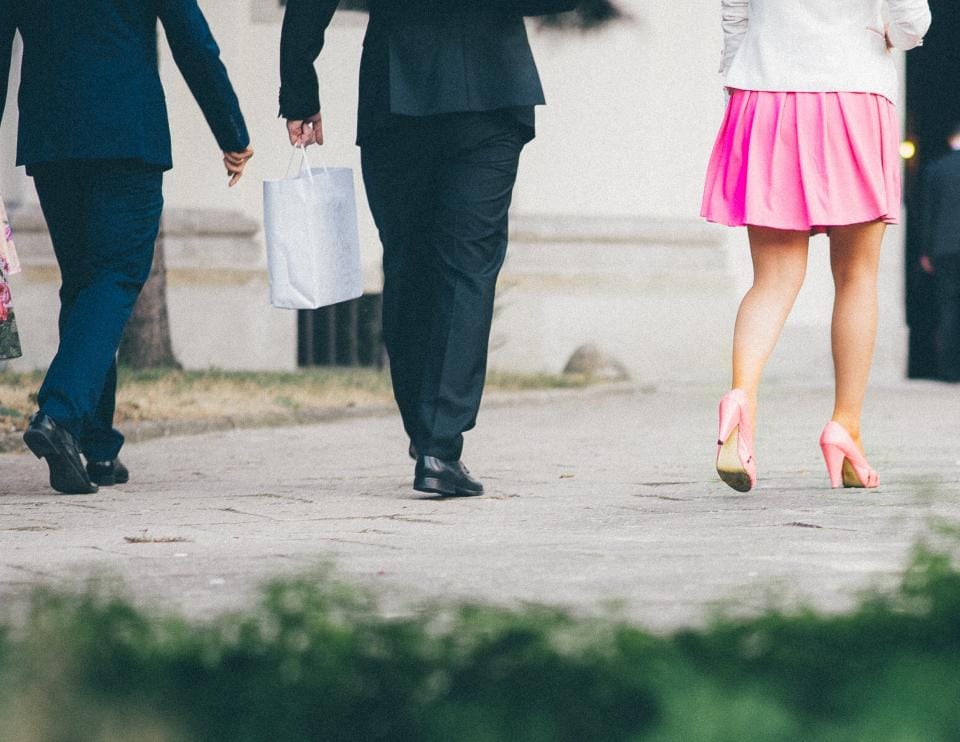
Most pages about this search pretend the category is bigger than it is. It is not. Genuinely foot-shaped women's dress shoes barely exist, and the reason is that a formal women's shoe is defined partly by a tapered silhouette — the shape is the product. Widen the toe box and it stops looking like the thing people are shopping for.
So this page is short on picks by design, and long on how to judge a listing. Four shoes we can stand behind, and the test that stops you buying the other forty.
The test: look at the shoe from above
Every listing in this category uses the same words. What it cannot fake is the outline. Find a photograph of the shoe from directly above, or of the sole, and look for two things.
- Where is the widest point? On a foot-shaped shoe it is at the toes. On a conventional dress shoe it is at the ball of the foot, and the shoe narrows from there to a point - which is where your first and fifth toes are.
- Is the inside edge straight? Your big toe runs almost straight from the joint to the tip. If the inside edge of the sole curves inward, the shoe will push that toe sideways no matter what width it is sold in.
A wide fitting in a tapered shoe gives you more room at the ball of the foot and the same point at the end, which is the opposite of what a splayed forefoot needs. Toe box shapes explained has the full visual guide, and it is worth four minutes before you spend money in this category.
What actually exists, by dress code
What is honestly missing from that table: a genuinely wide-toe-box heel, a pointed-toe pump, a formal ballet flat. We do not have a pick for those because we have not found one in a currently-sold US listing we would be willing to put our name to. If that is what your dress code requires, the realistic strategy is a foot-shaped shoe for the commute and the desk, and the formal pair for the hours it is actually needed. That is not the answer anyone wants and it is the true one.
Heel height is a separate question
It is worth separating the two things a dress shoe does to your foot. A raised heel moves your weight forward onto the forefoot and shortens the calf over time. A pointed toe box squeezes the forefoot from the sides. They are independent, and a flat shoe with a sharp point is still bad for your toes.
If you are coming out of heels, bring the height down gradually rather than all at once — years in a raised heel shortens the calf and Achilles, and a sudden move to zero drop is exactly the rushed transition that causes trouble. How to transition to barefoot shoes covers the staging, and barefoot shoes calf pain explains the symptom you are most likely to meet first.
If this is about pain rather than style
A lot of searches for this phrase come from someone whose formal shoes hurt. If that is you, the toe box is the part doing the damage and the part worth fixing. Do barefoot shoes help with bunions explains the mechanism — a wide toe box reduces pressure on the joint without correcting it — and the bunions roundup ranks the shoes that deliver it. For a broad forefoot without a bunion, women's barefoot shoes and wide feet for women are the better starting points.
Before you order: fit and transition
Two things matter more than which shoe on this page you pick, and both are free.
Get the size right. Barefoot brands size from internal length rather than from a conventional size label, and you need roughly 10 to 15 mm beyond your longest toe — more than a normal fitting leaves. Measure your feet, then use the sizing guide and the cross-brand table. Sizing up to get a wider shoe does not work: lasts scale in length, so you get heel slip and toes sitting behind the widest part of the shoe.
Build up slowly. The documented risk in this category is bone stress injury from a rushed transition — in one MRI study of 36 runners, 10 of the 19 who spent 10 weeks moving into minimal shoes developed new bone-marrow edema, mostly without symptoms. Keep your current shoes, add minimal-shoe hours gradually, and judge by how your feet feel the next morning. The transition plan.
Dress-shoe specific: leather stretches a little across the width and not at all in length, so buy for length first. A leather shoe that is 5 mm too short will never become long enough, however long you wear it in.
The picks in detail
The four options, ordered from most formal to most casual. Two are dress shoes; the other two are honest about what they are.
Vivobarefoot Geo Court
Vivobarefoot's most popular urban shape: a classic court-sneaker silhouette over a thin, flexible sole, so it does not announce itself.
What works
- Looks like an ordinary white sneaker from two feet away
- Thin sole and real flex, unlike most fashion-minimalist shoes
- Holds its shape better than knit uppers
What does not
- No cushioning for a day of city pavement
- Leather version needs breaking in across the toe joint
Skip these if: You want a shoe you can walk 15,000 steps a day on concrete in from week one.
Specifications as published by the maker and reported by AZ Big Media, 10 best barefoot shoes for everyday walking 2026. We have not measured them ourselves. Vivobarefoot fit profile
Be Lenka Prime 2.0
A clean, low-profile sneaker that reads as fashion rather than footwear-as-ideology - the shoe for someone who refuses to look like a barefoot convert.
What works
- Genuinely good-looking in a category that mostly is not
- Wide toe box hidden inside a slim silhouette
- Multiple colorways including all-black for work
What does not
- No cushioning at all
- Brand-direct, with EU-to-US shipping and returns
Skip these if: You stand on hard floors all day or you want an easy returns process.
Specifications as published by the maker and reported by Be Lenka Prime 2.0 retailer listing. We have not measured them ourselves. Be Lenka fit profile
Xero Shoes Dillon (and Dillon Slip-On)
A wide toe box in a shape that passes as a normal shoe, and - unusually for barefoot footwear - it works on a low-volume foot with the insole removed.
What works
- One of very few barefoot slip-ons that fits low-volume feet properly
- Reads as a normal casual shoe at an office that notices shoes
- Removable insole for volume adjustment
What does not
- Not a dress shoe - it will not pass with a suit
- Soft upper creases quickly
Skip these if: You need a genuine leather dress shoe, or you have a high-volume foot that needs the insole in.
Specifications as published by the maker and reported by Anya's Reviews, Xero Shoes Spring 2026 collection review. We have not measured them ourselves. Xero Shoes fit profile
Lems Primal Zen
Lems builds one of the roomiest everyday lasts in the category - if other barefoot shoes still feel tight across the toes, start here.
What works
- Among the widest forefoot shapes available off the shelf
- High enough toe box for a tall big toe or a hammer toe
- Flexes flat and packs small
What does not
- The width that makes it work looks bulbous to some people
- Heel can be loose on a narrow heel
Skip these if: You have a narrow foot - all that room becomes heel slip and a sloppy fit.
Specifications as published by the maker and reported by Lems Shoes product listing, Primal Zen. We have not measured them ourselves. Lems Shoes fit profile
Common questions
Are there any wide toe box dress shoes for women?
A few, and fewer than the search results suggest. The Vivobarefoot Geo Court is the most formal option we can stand behind, with the Be Lenka Prime 2.0 as a leather alternative. A genuinely foot-shaped heel or pointed pump is something we have not found worth recommending.
How can I tell if a shoe really has a wide toe box?
Look at it from directly above or at the sole. On a foot-shaped shoe the widest point is at the toes and the inside edge runs almost straight. A conventional shoe is widest at the ball and tapers to a point, and a wide fitting in that shape does not fix it.
Does wide fit mean wide toe box?
Usually not. Wide fit normally means a wider version of the same tapered last - more room at the ball of the foot, the same point at the end. That is the opposite of what a splayed forefoot needs.
Can I wear barefoot shoes to a formal office?
A leather court-sneaker cut passes in most business-casual settings. A strict formal code that expects a heel or a pump is a situation where this category currently has no honest answer, and wearing foot-shaped shoes for the rest of the day is the practical compromise.
Is a flat shoe automatically better for my feet?
Not if it is pointed. Heel height and toe shape are separate problems: a flat shoe with a sharp toe still compresses the forefoot. You want both - zero drop and a toe box that is widest at the toes.
How do I switch from heels without pain?
Gradually. Years in a raised heel shorten the calf and Achilles, so dropping straight to zero drop is the classic rushed transition. Step the height down over weeks, expect calf tightness, and judge it by the next morning rather than by the first hour.
Sources
- Outdoor Life, best barefoot shoes 2026 — stated stack heights and weights
- RunRepeat barefoot running shoes catalog
- Ridge et al., foot bone marrow edema after 10-week transition to minimal footwear
- Footwear Toe-Box Shape and Medial Forefoot Pressures in Women With Hallux Valgus
Accessed October 2026. Where a source is a manufacturer, the specification is theirs as published — we have not measured it.
Read next
Best Dress-Adjacent
Best barefoot dress shoes (October 2026)
A small, expensive market. What passes in a smart-casual office, what does not pass with tailoring, and the realistic workaround.
By Brijon M. · Updated October 2026
Top pick: Vivobarefoot Geo Court
Toe box shapes explained
Width, widest-point placement, taper direction and toe spring — the four properties that decide whether your toes actually fit.
By Brijon M. · Updated October 2026
Top pick: Lems Primal Zen
Best for Women
Best barefoot shoes for women (October 2026)
Seven women's-sizing picks, plus the heel-slip fix and the honest state of the smart-casual market.
By Brijon M. · Updated October 2026
Top pick: Xero Shoes Prio
Best Wide, Women's
The best barefoot shoes for wide feet (women)
Six barefoot shoes for a wide forefoot, sorted by what each one does with a narrow heel and a low instep.
By Brijon M. · Updated October 2026
Top pick: Lems Primal Zen
Do barefoot shoes help with bunions?
They change the pressure on the joint, which is what hurts. They do not change its alignment. The mechanism and the evidence.
By Brijon M. · Updated October 2026
Top pick: Lems Primal Zen
Calf pain in barefoot shoes
Diffuse tightness for two to four weeks is expected. The mechanism, six things that help, and the patterns that mean stop.
By Brijon M. · Updated October 2026
Top pick: Xero Shoes Scrambler Low