Barefoot vs Flip-Flops
Barefoot shoes vs flip-flops
Thin and flat, and still the opposite of what a barefoot shoe is for. The reason is retention.
By Brijon M. · Updated October 2026
Flip-flops are thin and flat but they are not minimalist footwear, because nothing holds them on. You keep them on your foot by curling your toes and gripping the toe post, which is the exact opposite of the toe splay a barefoot shoe exists to allow. A barefoot sandal with a heel strap fixes this.
How this page is funded: some links here are Amazon affiliate links, so we may earn a commission if you buy — at no extra cost to you. It never changes which products we include or how we rank them, and we take no payment from brands for placement. Full disclosure.
Quick picks
Tap any row to jump to the full write-up. Selection is specification-led, not wear-tested — how we choose.
| # | Product | Best for | Price |
|---|---|---|---|
| 1 |  Best replacementXero Shoes Z-Trail EVAn 11 mm three-layer sole at under 11 oz that rolls up into a jacket pocket - the most practical barefoot sandal for people who are not sandal people. | 11 mm sole, proper strap system | |
| 2 |  Closest feelEarth Runners Alpha Adventure SandalsAt 7.6 oz a pair with an 11 mm sole, this is the lightest thing on this page - vegan, with a lifetime warranty on the straps. | 7.6 oz a pair, flat nylon strapping | |
| 3 |  ThinnestLuna Sandals Oso FlacoA 7 mm sole for people who want the sandal to disappear. Nothing here is closer to actually being barefoot with a sole strapped on. | 7 mm sole, if thin is the point | |
| 4 | 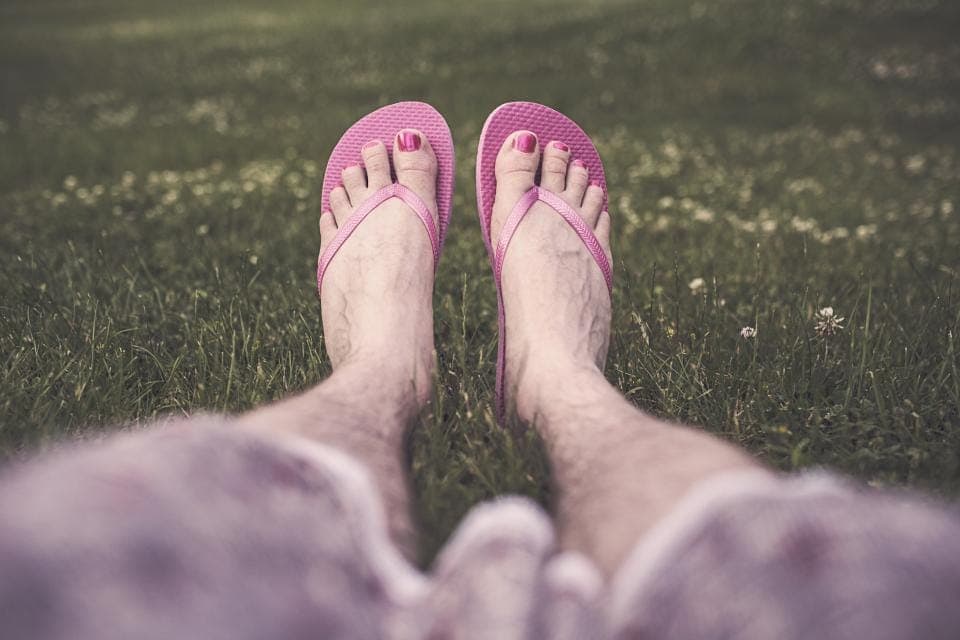 Best toe post done rightBedrock Cairn Adventure SandalsA 14 mm Vibram sole at 15 oz with a toe post that actually holds on descents - the sandal you hike in rather than the sandal you pack. | 14 mm sole, toe post plus retention |
#ad Prices come from the retailer and change; we never publish a figure we have not verified live. Affiliate disclosure.
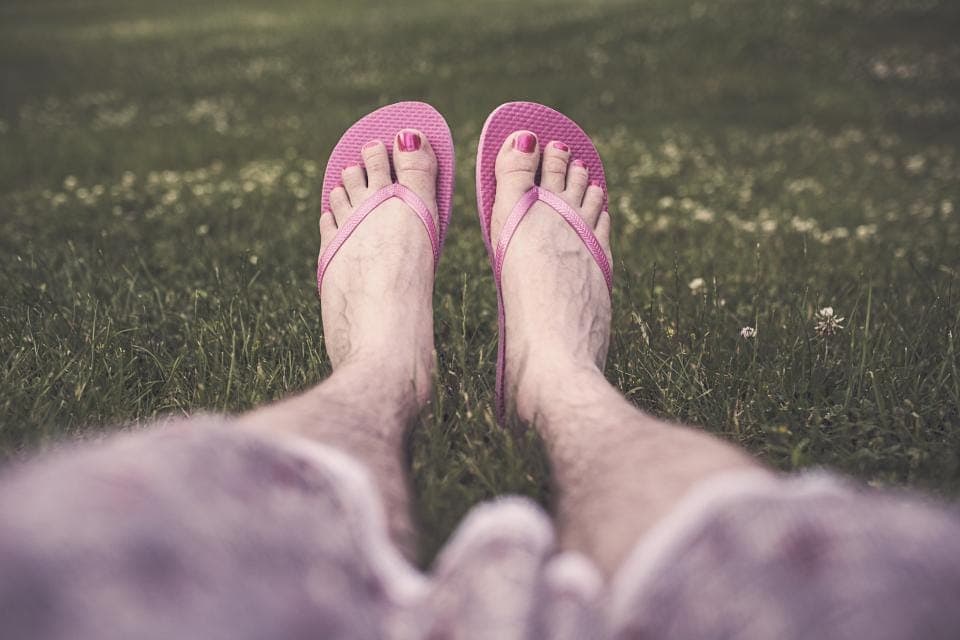
Flip-flops are thin, flat, cheap and almost weightless, which is why they get called minimalist footwear constantly. Against the three-part test they do genuinely well on two counts: the sole is thin and flexible, and there is nothing resembling arch support or a heel wedge.
They fail on a fourth property that the three-part test does not mention, because no actual shoe fails it: nothing holds them onto your foot.
The retention problem
A flip-flop is attached to you at exactly one point — the toe post, between your first and second toes. There is no heel strap and no upper. So with every step, something has to stop the sandal falling off, and that something is your toes: you curl them slightly and grip the post to carry the sandal through the swing phase.
That is the problem, and it is not a small one. The entire point of a wide toe box is to let your toes spread out and stay relaxed. A flip-flop requires them to do the opposite, thousands of times a day, which is why a shoe with a cramped toe box and a flip-flop can both leave your forefoot aching for related reasons.
You can feel this directly without any equipment. Walk a few steps in flip-flops and pay attention to your first two toes; then do the same in a strapped sandal. The gripping is obvious once you are looking for it.
Scoring them honestly
A toe post is not the problem — a toe post alone is
This is worth being precise about, because plenty of good barefoot sandals use a toe post. The Bedrock Cairn does. The difference is that it uses the toe post together with a strap system that holds the heel, so the post guides the foot rather than carrying the sandal.
Once the heel is secured, your toes have no job to do, and they can sit flat and spread exactly as they would in a closed minimal shoe. That is the whole fix, and it is why every sandal in our picks has some form of heel retention.
What to buy instead
If what you like about flip-flops is how little there is of them, the Earth Runners Alpha is the closest thing in a proper sandal: 7.6 oz for the pair, flat nylon strapping and an 11 mm sole. If you want the thinnest sole available, the Luna Oso Flaco at 7 mm. If you want one sandal that handles a city, a trail and a river, the Xero Shoes Z-Trail EV is the all-rounder and the one most people should buy.
All of them cost meaningfully more than flip-flops, and all of them need five minutes of strap adjustment when they arrive. That adjustment is the whole product. The full sandal roundup covers the retention systems in detail, and barefoot shoes vs sandals is the page to read if you are not sure you want open footwear at all.
The picks in detail
Four sandals that give you the thinness and the flat platform flip-flops give you, plus the retention they do not.
1. Best replacement
Xero Shoes Z-Trail EV
An 11 mm three-layer sole at under 11 oz that rolls up into a jacket pocket - the most practical barefoot sandal for people who are not sandal people.
What works
- Rolls up small enough to pack as a camp or travel second shoe
- The strap system adjusts in three places, which solves most volume problems
- Lightest practical choice for water and heat
What does not
- Strap break-in can rub the top of the foot
- Less grip on wet rock than a Vibram-soled sandal
Skip these if: You need technical traction for river crossings or scrambling - a Vibram Megagrip sandal is the better buy.
Specifications as published by the maker and reported by Greenbelly, best minimalist and running sandals specifications. We have not measured them ourselves. Xero Shoes fit profile
2. Closest feel
Earth Runners Alpha Adventure Sandals
At 7.6 oz a pair with an 11 mm sole, this is the lightest thing on this page - vegan, with a lifetime warranty on the straps.
What works
- Genuinely the lightest practical barefoot sandal
- Lifetime strap warranty, which the straps need
- Secure enough for hiking and water, per the roundups that measured it
What does not
- 11 mm and no lugs means limited traction on wet rock
- Flat strapping can hot-spot on a high instep
Skip these if: You want traction on technical wet terrain, or you need underfoot protection from sharp rock.
Specifications as published by the maker and reported by Greenbelly, best minimalist and running sandals specifications. We have not measured them ourselves. All brand fit profiles
3. Thinnest
Luna Sandals Oso Flaco
A 7 mm sole for people who want the sandal to disappear. Nothing here is closer to actually being barefoot with a sole strapped on.
What works
- 7 mm is extraordinary ground feel for a shoe you can walk a town in
- Luna's strap system is among the most adjustable
What does not
- 7 mm offers essentially no protection
- Heavier than the Earth Runners despite being thinner
Skip these if: You have not already spent months in minimal footwear. This is an end-state sandal.
Specifications as published by the maker and reported by Greenbelly, best minimalist and running sandals specifications. We have not measured them ourselves. All brand fit profiles
4. Best toe post done right
Bedrock Cairn Adventure Sandals
A 14 mm Vibram sole at 15 oz with a toe post that actually holds on descents - the sandal you hike in rather than the sandal you pack.
What works
- Vibram rubber grips wet rock properly
- The toe post stops the foot sliding forward on steep descents
- Repairable and resolable rather than disposable
What does not
- Heaviest sandal here
- The toe post needs real break-in and not everyone adapts to it
Skip these if: You cannot tolerate anything between your toes, or you want a sandal that packs small.
Specifications as published by the maker and reported by Greenbelly, best minimalist and running sandals specifications. We have not measured them ourselves. All brand fit profiles
Common questions
Are flip-flops barefoot shoes?
No. They are thin and flat, which gets them close, but nothing holds them on — you grip the toe post with your toes to keep them on your foot. That is the opposite of the relaxed toe splay a barefoot shoe exists to allow.
Are flip-flops bad for your feet?
For short distances on flat ground they are unremarkable. The issue is sustained walking: the toe-gripping needed to retain them works your forefoot in exactly the pattern a wide toe box is meant to relieve, and there is no heel retention on uneven ground.
Are barefoot sandals better than flip-flops?
Yes, for anything beyond a few minutes. A barefoot sandal has the same thin flat sole plus a strap system that holds your heel, so your toes stay relaxed and the sandal stays put on a descent.
Is a toe post bad in a barefoot sandal?
Not at all — the Bedrock Cairn uses one. The problem is a toe post with nothing else. Combined with heel retention, the post simply guides the foot instead of carrying the whole sandal.
What is the closest barefoot sandal to a flip-flop?
The Earth Runners Alpha, at 7.6 oz for the pair with flat nylon strapping and an 11 mm sole. It feels like almost nothing while still having a heel strap, which is the part flip-flops are missing.
Sources
- Outdoor Life, best barefoot shoes 2026 — stated stack heights and weights
- RunRepeat barefoot running shoes catalog
- Ridge et al., foot bone marrow edema after 10-week transition to minimal footwear
Accessed October 2026. Where a source is a manufacturer, the specification is theirs as published — we have not measured it.
Read next
Best Sandals
Best barefoot sandals (October 2026)
Six sandals from 7 mm to 14 mm, compared on sole, weight, traction and straps — plus the toe-post question.
By Brijon M. · Updated October 2026
Top pick: Xero Shoes Z-Trail EV
Shoes vs Sandals
Barefoot shoes vs barefoot sandals
A sandal is the same sole with the upper deleted. Four things change, three of them for the better — and the closed shoe is still what you buy first.
By Brijon M. · Updated October 2026
Top pick: Xero Shoes Z-Trail EV
What are barefoot shoes?
Zero drop, thin and flexible, wide and foot-shaped — and a 20-second test for whether a shoe really is all three.
By Brijon M. · Updated October 2026
Top pick: Xero Shoes Prio
Barefoot vs Birkenstock
Barefoot shoes vs Birkenstock
Contoured cork versus a flat footbed — opposite answers to the same question, plus the one Birkenstock that qualifies.
By Brijon M. · Updated October 2026
Top pick: Xero Shoes Z-Trail EV
Toe box shapes explained
Width, widest-point placement, taper direction and toe spring — the four properties that decide whether your toes actually fit.
By Brijon M. · Updated October 2026
Top pick: Lems Primal Zen
Best for Travel
The best barefoot travel shoes (October 2026)
Five packable minimal shoes ranked by published weight and by what each one lets you leave at home.
By Brijon M. · Updated October 2026
Top pick: Xero Shoes Z-Trail EV