Do barefoot shoes improve posture?
They change your standing posture the moment you put them on. Calling the change an improvement needs more care.
By Brijon M. · Updated October 2026
Barefoot shoes change your standing posture immediately, because removing a heel lift stops your body compensating for a forward tilt. Whether that is an improvement depends on how much lift you were in. What is better established is narrower and more interesting: thin, flexible shoes appear to strengthen the foot muscles that hold you up.
How this page is funded: some links here are Amazon affiliate links, so we may earn a commission if you buy — at no extra cost to you. It never changes which products we include or how we rank them, and we take no payment from brands for placement. Full disclosure.
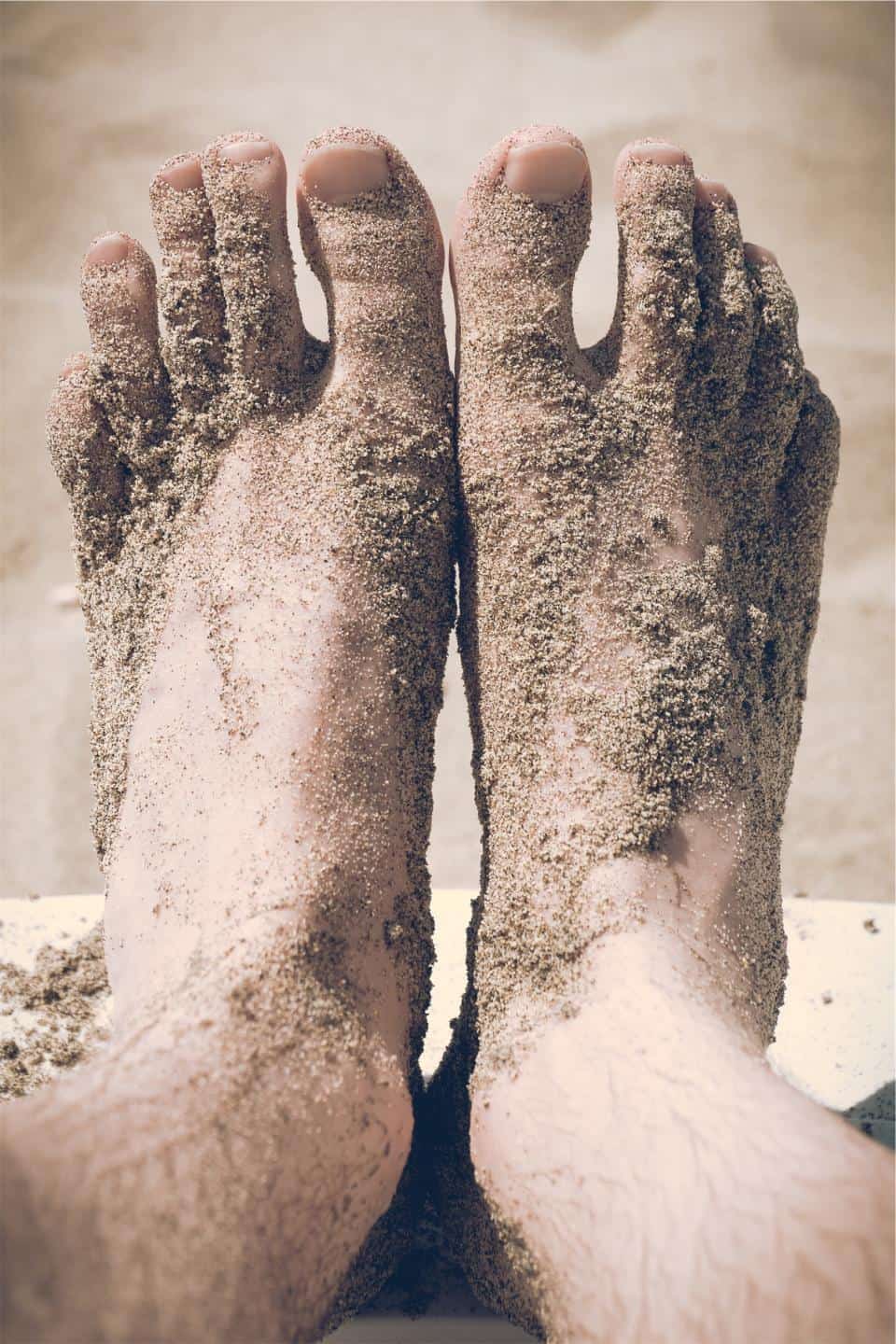
Put on a zero-drop shoe after years in a 10 mm heel and something changes straight away: you stand slightly differently, you feel it in your calves, and standing still for ten minutes is oddly tiring. That is a real effect and it is not subtle.
Whether to call it improved posture is a harder question, and the honest answer has two parts: the geometry is real and immediate, and the claim that better geometry means better outcomes is not established.
What actually changes when the heel comes down
A raised heel moves your center of mass forward. Standing in it requires getting that mass back over your feet, and the body does so with a small chain of compensations — usually some combination of increased pelvic tilt, increased lumbar curve, and a shift at the knees. None of these is dramatic in any single shoe. The point is that they are constant, for as many hours a day as you wear the shoe.
Remove the lift and the compensation is no longer needed. Your pelvis sits where it sits, your ankle is at a neutral angle, and your weight distributes across the whole foot rather than being pushed forward onto the forefoot. That is the mechanism, and it is uncontroversial.
The magnitude is what people overstate. If you have spent five years in flat-soled sneakers with a 4 mm drop, going to 0 mm changes very little. If you have spent five years in work boots with a 12 mm lift, it changes quite a lot. Most of the dramatic before-and-after accounts come from the second group, and they are describing a bigger geometric change rather than a stronger effect.
The part with better evidence
Shift the question from spines to feet and the research gets considerably more useful. A review of the effects of minimalist shoes on plantar intrinsic foot muscle size and strength found encouraging results for thin, flexible footwear specifically — these are the small muscles inside the foot that control the arch and contribute to balance.
That is a more interesting finding than the posture claim, because it is about a measurable structure responding to a change in demand. It is also slow. Muscle adaptation here is a matter of months, which is why the honest version of "barefoot shoes improve posture" is closer to: thin, flexible shoes appear to strengthen the structures that hold you up, over months, if you stick with them.
The related balance question has its own page, with the same structure of answer: do barefoot shoes help with balance.
What a shoe cannot do
It cannot fix a rounded upper back or a forward head position. Those live above the pelvis and have very little to do with your feet. If that is the posture you are worried about, footwear is not the lever.
It cannot make you stand well. Posture during a long standing shift is mostly about habit, fatigue and strength. A flat shoe removes one input. It does not stop you leaning on one hip for an hour.
It cannot compress the timeline. The foot-strength effect takes months, and trying to hurry it is how people end up with the opposite of better posture — calf pain, a limp, and asymmetric loading. Calf pain is the usual first sign of hurrying.
What to buy, if the mechanism convinces you
The two properties that matter here are zero drop — which delivers the geometry change — and a thin, flexible sole, which is what the foot-strength research is about. Width matters too, since toes that cannot splay contribute nothing to balance.
The Xero Shoes Prio is the sensible default: 7 to 8 mm, genuinely wide, with a removable 2 mm insole so you can go thinner as you adapt. The Vivobarefoot Primus Lite III is the thin end — 2 mm of sole plus 2 mm of tread, which is about as close to barefoot as a closed shoe gets, and the one to arrive at rather than start with. The Lems Primal Zen is the pick if your toes are crushed in everything else, since splay is part of the mechanism and a shoe that prevents it undoes the point.
The free version of all of this, which no shoe competes with: time barefoot at home on varied surfaces, plus the foot-strengthening exercises. If you are only going to do one thing from this page, do that one.
Before you order: fit and transition
Two things matter more than which shoe on this page you pick, and both are free.
Get the size right. Barefoot brands size from internal length rather than from a conventional size label, and you need roughly 10 to 15 mm beyond your longest toe — more than a normal fitting leaves. Measure your feet, then use the sizing guide and the cross-brand table. Sizing up to get a wider shoe does not work: lasts scale in length, so you get heel slip and toes sitting behind the widest part of the shoe.
Build up slowly. The documented risk in this category is bone stress injury from a rushed transition — in one MRI study of 36 runners, 10 of the 19 who spent 10 weeks moving into minimal shoes developed new bone-marrow edema, mostly without symptoms. Keep your current shoes, add minimal-shoe hours gradually, and judge by how your feet feel the next morning. The transition plan.
Posture-specific: the standing fatigue you feel in a flat shoe in week one is your calves holding a position they have not held in years. It eases. If it has not eased in a month, you have gone too thin too fast rather than discovered that flat shoes do not suit you.
The picks in detail
Three shoes that deliver both relevant properties — a flat platform and a thin, flexible sole — with published specs and honest cons.
Xero Shoes Prio
The closest thing to a default first barefoot shoe: genuinely wide, genuinely flexible, and cheap enough that a failed experiment does not hurt.
What works
- Removable 2 mm insole, so you can go thinner as your feet adapt
- Wide enough for most square and plateau foot shapes
- Flexes and rolls flat, which is the quickest way to spot a fake minimalist shoe
What does not
- The lacing panel can pressure a high instep
- Thin heel padding is noticeable on hard floors for the first week
Skip these if: You have a high-volume foot and dislike lace pressure across the top, or you need any cushioning at all on day one.
Specifications as published by the maker and reported by Xero Shoes Prio listing specifications. We have not measured them ourselves. Xero Shoes fit profile
Vivobarefoot Primus Lite III
A 2 mm sole with 2 mm of tread at 7.9 oz. About as close to barefoot as a closed shoe gets, and the yardstick everything else is measured against.
What works
- The thinnest sole here that still works as an everyday shoe
- Genuinely wide forefoot with a rounded, foot-shaped last
- Ships with access to the brand's own barefoot fundamentals course
What does not
- 4 mm total underfoot is brutal on concrete until your feet adapt
- Low volume through the midfoot - not for a high instep
- The most expensive shoe in most of our roundups
Skip these if: You are transitioning, you have a high-volume foot, or you stand on concrete all day. All three are real reasons to start thicker.
Specifications as published by the maker and reported by Outdoor Life, best barefoot shoes 2026 stated specifications. We have not measured them ourselves. Vivobarefoot fit profile
Lems Primal Zen
Lems builds one of the roomiest everyday lasts in the category - if other barefoot shoes still feel tight across the toes, start here.
What works
- Among the widest forefoot shapes available off the shelf
- High enough toe box for a tall big toe or a hammer toe
- Flexes flat and packs small
What does not
- The width that makes it work looks bulbous to some people
- Heel can be loose on a narrow heel
Skip these if: You have a narrow foot - all that room becomes heel slip and a sloppy fit.
Specifications as published by the maker and reported by Lems Shoes product listing, Primal Zen. We have not measured them ourselves. Lems Shoes fit profile
Common questions
Do barefoot shoes improve posture?
They change standing posture immediately, by removing the heel lift your body was compensating for. Whether that counts as improvement is not established in research, and the size of the change depends on how much lift you were wearing before.
How do zero-drop shoes affect posture?
A raised heel pushes your center of mass forward and the body compensates with pelvic tilt and lumbar curve. Removing the lift removes the need for that compensation, so the pelvis and ankle sit at a neutral angle and weight distributes across the whole foot.
How long does it take for barefoot shoes to change posture?
The geometric change is immediate. The adaptation that makes it comfortable - calf length and foot muscle strength - takes months, and the plantar intrinsic muscle research is about that slower timescale rather than the instant one.
Can barefoot shoes fix rounded shoulders?
No. Rounded shoulders and forward head position sit above the pelvis and have very little relationship to your footwear. A flat shoe removes one input at the bottom of the chain; it does not reach the top of it.
Is standing barefoot better than wearing barefoot shoes?
For the foot-strength mechanism, barefoot time on varied surfaces is the strongest version of the stimulus and it costs nothing. Shoes exist because most of your day happens on hard, uniform, dirty surfaces where going barefoot is not practical.
Sources
- Outdoor Life, best barefoot shoes 2026 — stated stack heights and weights
- RunRepeat barefoot running shoes catalog
- Ridge et al., foot bone marrow edema after 10-week transition to minimal footwear
- Effects of Minimalist Shoes on Plantar Intrinsic Foot Muscle Size and Strength: A Review
Accessed October 2026. Where a source is a manufacturer, the specification is theirs as published — we have not measured it.
Read next
Do barefoot shoes strengthen your feet?
Yes — ultrasound studies measured 7-11% muscle size gains and 9-57% strength gains. What that means and how to get it safely.
By Brijon M. · Updated October 2026
Top pick: Vibram FiveFingers KSO EVO
Do barefoot shoes help with balance?
Two plausible mechanisms and one catch: an unadapted foot in a thin sole often feels less stable at first.
By Brijon M. · Updated October 2026
Top pick: Vibram FiveFingers KSO EVO
Do barefoot shoes help with back pain?
No evidence of a treatment effect, a plausible posture mechanism, and a real way a fast switch makes back pain worse.
By Brijon M. · Updated October 2026
Top pick: Xero Shoes Scrambler Low

Foot strengthening exercises for the transition
Six exercises, fifteen minutes, three times a week — building the capacity minimal shoes demand without the loading risk.
By Brijon M. · Updated October 2026
Top pick: Correct Toes Toe Spacers
Barefoot shoe benefits — and the drawbacks
Benefits sorted by evidence quality, oversold claims named as such, and the drawbacks given equal space.
By Brijon M. · Updated October 2026
Top pick: Xero Shoes Prio
What is zero drop?
Drop is the height difference between a shoe's heel and forefoot. Zero drop means level — and says nothing about cushioning.
By Brijon M. · Updated October 2026
Top pick: Altra Lone Peak 9