Do barefoot shoes help with flat feet?
The strength argument has reasonable support. The arch-rebuilding claim does not. The difference decides whether this is for you.
By Brijon M. · Updated October 2026
Barefoot shoes can help flat feet by loading the small muscles that support the arch, and a review of minimalist footwear found encouraging results for plantar intrinsic foot muscle size and strength. They do not rebuild an arch, and a rigid flat foot is a different problem from a flexible one - that distinction matters more than the shoe you choose.
How this page is funded: some links here are Amazon affiliate links, so we may earn a commission if you buy — at no extra cost to you. It never changes which products we include or how we rank them, and we take no payment from brands for placement. Full disclosure.
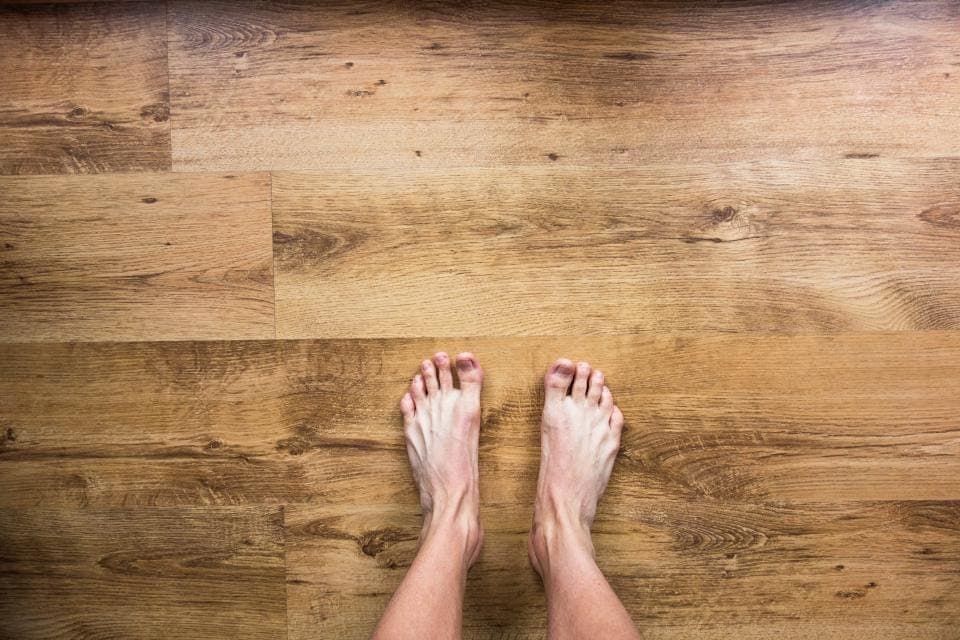
Here is the version we can support: barefoot shoes can make the muscles that hold your arch stronger, over months, and that can reduce symptoms. Here is the version you will see online that we cannot support: that they rebuild a fallen arch. Arch height is largely structural, and a shoe is not a reconstruction.
Before any of that, there is a distinction that matters more than the footwear, and most articles skip it: whether your flat foot is flexible or rigid.
Flexible or rigid, and how to tell
Sit down and let one foot hang with no weight on it, then look at the inside of the foot. If an arch appears when the foot is unloaded and flattens when you stand on it, that is a flexible flat foot — the structure is there and the question is what holds it up. If the sole stays flat whether loaded or not, that is a rigid flat foot, which has a different set of causes and should be looked at by a podiatrist before you change anything about your footwear.
Everything the rest of this page says about strengthening applies to the flexible kind. For the rigid kind, a thin flexible shoe is not obviously the right tool and we are not going to pretend to know.
The mechanism, and what research supports it
Your arch is held by bone shape, by the plantar fascia and ligaments, and by muscles — including the small plantar intrinsic muscles inside the foot itself. A conventional shoe with a molded arch support does part of that job for you. A thin, flexible, flat shoe does not, so the muscles do more work.
A review of the effects of minimalist shoes on plantar intrinsic foot muscle size and strength found encouraging results for exactly that mechanism. Note what the finding is about: muscle size and strength. Not arch height, not pain scores, not permanent structural change. Strength is a reasonable thing to pursue and it is a long way from rebuilding a foot.
The timescale is months, not weeks, which is the part people abandon too early. Do barefoot shoes strengthen feet goes into the research in more depth, and foot strengthening exercises covers the free half of the program — the exercises do more of this work than the shoes do.
What about arch support
This is the argument people arrive with, and the honest position is less absolute than either camp's. Arch support is not harmful; it is a different strategy. It reduces the demand on the structures that hold your arch, which relieves symptoms now and does nothing for strength. Minimal footwear increases the demand, which may build strength over months and will feel worse first.
Neither is cheating and neither is a cure. If you have pain today, the support strategy is a legitimate way to get through today. Barefoot shoes vs orthotics and barefoot shoes vs arch support set out the trade in full, and do barefoot shoes have arch support answers the literal question.
How to do it without hurting yourself
The risk is not specific to flat feet, but a flat foot does not protect you from it either. In an MRI study of 36 runners, 10 of the 19 who spent 10 weeks transitioning into minimal shoes developed new bone-marrow edema — early bone stress — mostly without symptoms. That is the documented downside of this category, and the mitigation is pace.
So: keep your current shoes, start with an hour or two a day in a thicker zero-drop shoe rather than a thin one, add hours gradually, and judge by how your feet and arches feel the next morning. If anything is still sore at breakfast, hold at that level for another week. The transition plan is the detail, and the three picks below are ordered from most forgiving to thinnest for exactly this reason.
Before you order: fit and transition
Two things matter more than which shoe on this page you pick, and both are free.
Get the size right. Barefoot brands size from internal length rather than from a conventional size label, and you need roughly 10 to 15 mm beyond your longest toe — more than a normal fitting leaves. Measure your feet, then use the sizing guide and the cross-brand table. Sizing up to get a wider shoe does not work: lasts scale in length, so you get heel slip and toes sitting behind the widest part of the shoe.
Build up slowly. The documented risk in this category is bone stress injury from a rushed transition — in one MRI study of 36 runners, 10 of the 19 who spent 10 weeks moving into minimal shoes developed new bone-marrow edema, mostly without symptoms. Keep your current shoes, add minimal-shoe hours gradually, and judge by how your feet feel the next morning. The transition plan.
Flat-foot specific: a flat foot is often a broad foot as well, and it frequently needs a wider last rather than a longer shoe. The flat feet roundup ranks the options with that in mind.
The picks in detail
Three shoes, ordered from most forgiving to thinnest - start at the top of this list rather than the bottom.
Xero Shoes Scrambler Low
An 11.5 mm stack with 4 mm of foam and a removable 3.5 mm insole - the most forgiving zero-drop shoe here, and the one we would hand a nervous switcher.
What works
- The removable 3.5 mm insole gives you two shoes in one as your feet adapt
- Enough foam to survive a full day on concrete in week one
- Still flexes and still zero drop
What does not
- 11.5 mm is a lot of shoe if you came for ground feel
- Heavier than the rest of the line
Skip these if: You have already transitioned and want maximum ground feel - this will feel like a normal sneaker.
Specifications as published by the maker and reported by Outdoor Life, best barefoot shoes 2026 stated specifications. We have not measured them ourselves. Xero Shoes fit profile
Xero Shoes Prio
The closest thing to a default first barefoot shoe: genuinely wide, genuinely flexible, and cheap enough that a failed experiment does not hurt.
What works
- Removable 2 mm insole, so you can go thinner as your feet adapt
- Wide enough for most square and plateau foot shapes
- Flexes and rolls flat, which is the quickest way to spot a fake minimalist shoe
What does not
- The lacing panel can pressure a high instep
- Thin heel padding is noticeable on hard floors for the first week
Skip these if: You have a high-volume foot and dislike lace pressure across the top, or you need any cushioning at all on day one.
Specifications as published by the maker and reported by Xero Shoes Prio listing specifications. We have not measured them ourselves. Xero Shoes fit profile
Lems Primal Zen
Lems builds one of the roomiest everyday lasts in the category - if other barefoot shoes still feel tight across the toes, start here.
What works
- Among the widest forefoot shapes available off the shelf
- High enough toe box for a tall big toe or a hammer toe
- Flexes flat and packs small
What does not
- The width that makes it work looks bulbous to some people
- Heel can be loose on a narrow heel
Skip these if: You have a narrow foot - all that room becomes heel slip and a sloppy fit.
Specifications as published by the maker and reported by Lems Shoes product listing, Primal Zen. We have not measured them ourselves. Lems Shoes fit profile
Common questions
Do barefoot shoes help with flat feet?
They can, by loading the small muscles that support the arch - a review of minimalist footwear found encouraging results for plantar intrinsic foot muscle size and strength. What they do not do is rebuild an arch, and the timescale is months rather than weeks.
Can barefoot shoes fix flat feet?
No. Strength can improve while arch height does not, because arch shape is largely structural. Anyone promising a rebuilt arch from footwear is overclaiming, and for a rigid flat foot the claim is not even mechanically plausible.
Are barefoot shoes bad for flat feet?
Not inherently, but going thin too quickly is risky for anyone. The documented downside of this category is bone stress injury from a rushed transition, so start in a thicker zero-drop shoe and build up. If you have pain now, see a clinician first.
What is the difference between flexible and rigid flat feet?
A flexible flat foot shows an arch when it is unloaded and flattens under weight. A rigid flat foot stays flat either way. The strengthening argument on this page applies to the flexible kind; a rigid flat foot should be assessed by a podiatrist.
Should I wear arch supports or barefoot shoes?
They are different strategies rather than right and wrong. Support reduces the demand on the arch and relieves symptoms now; minimal footwear increases the demand and may build strength over months. If you are in pain today, support is a reasonable way to get through today.
How long before I notice a difference?
Months. The muscle adaptation the research describes is slow, which is why most people who try this and quit do so in week three. Judge progress by how your feet feel the morning after a long day, not by how they feel in the shop.
Sources
- Outdoor Life, best barefoot shoes 2026 — stated stack heights and weights
- RunRepeat barefoot running shoes catalog
- Ridge et al., foot bone marrow edema after 10-week transition to minimal footwear
- Effects of Minimalist Shoes on Plantar Intrinsic Foot Muscle Size and Strength: A Review
Accessed October 2026. Where a source is a manufacturer, the specification is theirs as published — we have not measured it.
Read next
Best for Flat Feet
Best barefoot shoes for flat feet (October 2026)
Flexible and rigid flat feet need opposite things. How to tell which you have, and the shoes for the case that fits.
By Brijon M. · Updated October 2026
Top pick: Xero Shoes Scrambler Low
Do barefoot shoes strengthen your feet?
Yes — ultrasound studies measured 7-11% muscle size gains and 9-57% strength gains. What that means and how to get it safely.
By Brijon M. · Updated October 2026
Top pick: Vibram FiveFingers KSO EVO
Barefoot vs Orthotics
Barefoot shoes vs orthotics
Orthotics share load; barefoot shoes return it. Which you need depends on whether your foot wants rest or training.
By Brijon M. · Updated October 2026
Top pick: Xero Shoes Scrambler Low

Foot strengthening exercises for the transition
Six exercises, fifteen minutes, three times a week — building the capacity minimal shoes demand without the loading risk.
By Brijon M. · Updated October 2026
Top pick: Correct Toes Toe Spacers
Do barefoot shoes help with bunions?
They change the pressure on the joint, which is what hurts. They do not change its alignment. The mechanism and the evidence.
By Brijon M. · Updated October 2026
Top pick: Lems Primal Zen
Best With Some Support
Best minimalist shoes if you want arch support (October 2026)
No barefoot shoe has arch support. The three honest alternatives, ordered from most cushioned to least.
By Brijon M. · Updated October 2026
Top pick: Altra Lone Peak 9