Barefoot vs Grounding
Barefoot shoes vs grounding shoes
Two different claims that get sold together. They deserve to be assessed separately.
By Brijon M. · Updated October 2026
Barefoot shoes are a mechanical proposition: flat, thin, wide, with measured effects on foot muscle strength. Grounding (or earthing) shoes add a conductive path from your foot to the ground, claiming health effects that are not supported by the kind of evidence the mechanical claims have.
How this page is funded: some links here are Amazon affiliate links, so we may earn a commission if you buy — at no extra cost to you. It never changes which products we include or how we rank them, and we take no payment from brands for placement. Full disclosure.
Quick picks
Tap any row to jump to the full write-up. Selection is specification-led, not wear-tested — how we choose.
| # | Product | Best for | Price |
|---|---|---|---|
| 1 |  Best grounding sandalEarth Runners Alpha Adventure SandalsAt 7.6 oz a pair with an 11 mm sole, this is the lightest thing on this page - vegan, with a lifetime warranty on the straps. | A genuinely good light sandal, stud included | |
| 2 |  Best sandal, no groundingXero Shoes Z-Trail EVAn 11 mm three-layer sole at under 11 oz that rolls up into a jacket pocket - the most practical barefoot sandal for people who are not sandal people. | Same job, more adjustable, packs smaller | |
| 3 |  Best closed-shoe optionVivobarefoot Primus Lite IIIA 2 mm sole with 2 mm of tread at 7.9 oz. About as close to barefoot as a closed shoe gets, and the yardstick everything else is measured against. | Mechanical benefits year-round |
#ad Prices come from the retailer and change; we never publish a figure we have not verified live. Affiliate disclosure.
These two ideas travel together in the same shops and the same social media, and they are not the same idea. One is a claim about mechanics. The other is a claim about electricity and physiology. They need separate assessment, and we are going to give them separate assessment even though it is less tidy than treating them as one movement.
What each claim actually is
Barefoot shoes claim that a flat, thin, flexible, wide shoe lets your foot work more as it would unshod. The specific downstream claim with real support is increased intrinsic foot muscle size and strength, measured by ultrasound in controlled studies. That is a mechanical claim with mechanical evidence.
Grounding shoes add a conductive element — typically a copper stud or a carbon-infused lace — that creates an electrical path from your skin, through the sole, to the earth. The claim is that this restores a connection to the earth's electrical potential, with asserted downstream effects on inflammation, sleep and recovery. That is a physiological claim, and it is a different kind of claim entirely.
Our honest position on grounding
We are not going to tell you grounding works, because we have not found the kind of evidence that would justify saying so, and we hold no qualification that would let us adjudicate the physiology. We are also not going to tell you the shoes are bad — a grounding sandal like the Earth Runners Alpha Adventure is, as a shoe, an excellent minimal sandal: 11 mm, 7.6 oz, the lightest practical option in its class, with a lifetime strap warranty.
So the practical answer is straightforward. Buy a grounding sandal if you want that sandal. It is a good sandal, and the copper stud costs you nothing. Do not buy it expecting a documented health effect from the stud, and do not pay a premium for the conductive element over an otherwise-equivalent sandal.
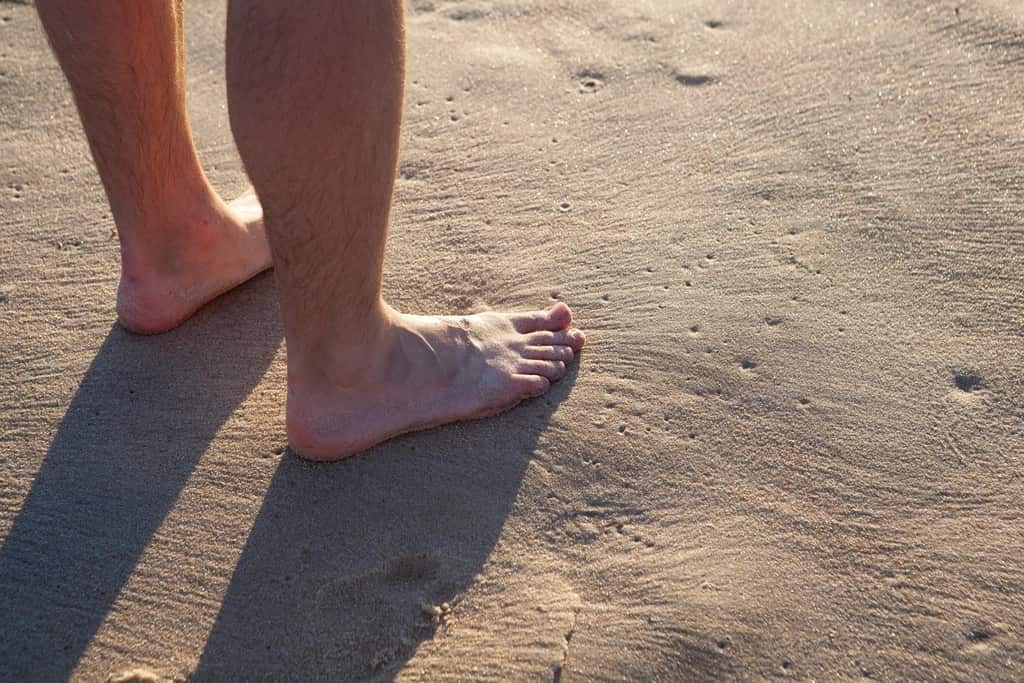
And note the obvious: if grounding is what you are after, standing barefoot on grass or soil achieves it directly and costs nothing. A shoe is the inconvenient way to do that.
Where the two overlap
Almost every grounding shoe on the market is also a barefoot shoe — flat, thin, flexible and wide — because the same audience buys both and the same designers make both. So you rarely have to choose. The mechanical benefits are available in a grounding sandal exactly as they are in a non-grounding one.
Which means you can treat the conductive element as a free extra on a purchase you were making anyway, and judge the shoe on sole thickness, strap adjustability, traction and weight — the things that determine whether you actually wear it. Our sandal roundup does exactly that.
The picks in detail
A grounding sandal, a non-grounding sandal at a similar spec, and a shoe for when you want the mechanical benefits in a closed shoe.
1. Best grounding sandal
Earth Runners Alpha Adventure Sandals
At 7.6 oz a pair with an 11 mm sole, this is the lightest thing on this page - vegan, with a lifetime warranty on the straps.
What works
- Genuinely the lightest practical barefoot sandal
- Lifetime strap warranty, which the straps need
- Secure enough for hiking and water, per the roundups that measured it
What does not
- 11 mm and no lugs means limited traction on wet rock
- Flat strapping can hot-spot on a high instep
Skip these if: You want traction on technical wet terrain, or you need underfoot protection from sharp rock.
Specifications as published by the maker and reported by Greenbelly, best minimalist and running sandals specifications. We have not measured them ourselves. All brand fit profiles
2. Best sandal, no grounding
Xero Shoes Z-Trail EV
An 11 mm three-layer sole at under 11 oz that rolls up into a jacket pocket - the most practical barefoot sandal for people who are not sandal people.
What works
- Rolls up small enough to pack as a camp or travel second shoe
- The strap system adjusts in three places, which solves most volume problems
- Lightest practical choice for water and heat
What does not
- Strap break-in can rub the top of the foot
- Less grip on wet rock than a Vibram-soled sandal
Skip these if: You need technical traction for river crossings or scrambling - a Vibram Megagrip sandal is the better buy.
Specifications as published by the maker and reported by Greenbelly, best minimalist and running sandals specifications. We have not measured them ourselves. Xero Shoes fit profile
3. Best closed-shoe option
Vivobarefoot Primus Lite III
A 2 mm sole with 2 mm of tread at 7.9 oz. About as close to barefoot as a closed shoe gets, and the yardstick everything else is measured against.
What works
- The thinnest sole here that still works as an everyday shoe
- Genuinely wide forefoot with a rounded, foot-shaped last
- Ships with access to the brand's own barefoot fundamentals course
What does not
- 4 mm total underfoot is brutal on concrete until your feet adapt
- Low volume through the midfoot - not for a high instep
- The most expensive shoe in most of our roundups
Skip these if: You are transitioning, you have a high-volume foot, or you stand on concrete all day. All three are real reasons to start thicker.
Specifications as published by the maker and reported by Outdoor Life, best barefoot shoes 2026 stated specifications. We have not measured them ourselves. Vivobarefoot fit profile
Common questions
Do grounding shoes work?
We have not found controlled evidence of the asserted health effects comparable to the evidence behind the mechanical claims for barefoot shoes, and we are not qualified to adjudicate the physiology. As minimal shoes, grounding sandals work perfectly well.
Are grounding shoes the same as barefoot shoes?
Most grounding shoes are also barefoot shoes — flat, thin, flexible and wide. The grounding part is an added conductive path, not a different shoe design.
Is a copper stud worth paying extra for?
We would not pay a premium for it. Judge the sandal on sole thickness, weight, strap adjustability and traction, and treat the stud as a free extra if the shoe wins on those.
Can you ground without special shoes?
Yes — standing barefoot on grass, soil or wet sand is the direct version and costs nothing.
Sources
- Greenbelly, best minimalist and running sandals — Earth Runners Alpha specifications
- Effects of Minimalist Shoes on Plantar Intrinsic Foot Muscle Size and Strength: A Review
Accessed October 2026. Where a source is a manufacturer, the specification is theirs as published — we have not measured it.
Read next

Best Sandals
Best barefoot sandals (October 2026)
Six sandals from 7 mm to 14 mm, compared on sole, weight, traction and straps — plus the toe-post question.
By Brijon M. · Updated October 2026
Top pick: Xero Shoes Z-Trail EV

What are barefoot shoes?
Zero drop, thin and flexible, wide and foot-shaped — and a 20-second test for whether a shoe really is all three.
By Brijon M. · Updated October 2026
Top pick: Xero Shoes Prio

Are barefoot shoes good for you?
Foot strength: good evidence. Posture and knees: thin evidence. Rushed transitions: documented bone stress injury. The honest version.
By Brijon M. · Updated October 2026
Top pick: Xero Shoes Scrambler Low

Best Water Shoes
Best barefoot water shoes (October 2026)
Five water shoes and sandals compared on drainage, wet-rock grip and underfoot protection — and why waterproof is wrong here.
By Brijon M. · Updated October 2026
Top pick: Saguaro Dive IV Water Shoes

Barefoot shoe benefits — and the drawbacks
Benefits sorted by evidence quality, oversold claims named as such, and the drawbacks given equal space.
By Brijon M. · Updated October 2026
Top pick: Xero Shoes Prio